Article outline
This practical guide is organised around key stages:
- Case study 1: Specialty coffee from Rwanda – How e-commerce helped Rwandan coffee cooperatives break into China
- Case study 2: Avocados from Kenya – A well-organised horticultural sector conquering the Chinese market
- Case study 3: Shea butter from Senegal – One SME’s determination to establish itself on the Asian cosmetics market
- Case study 4: Chili pepper “Made in Rwanda” – A young Rwandan entrepreneur lands a record contract in China
- Case study 5: Sesame seeds from Nigeria – The African sesame boom driven by Asian demand
- Conclusion: The keys to successful exporting in Asia
Case study 1: Specialty coffee from Rwanda
Rwanda, known for its high-altitude arabica coffees, has seen its smallholder producers gain direct access to Asian consumers through digital channels.
In 2018, an innovative partnership with Chinese platform Alibaba opened an online sales channel to China. Rwandan entrepreneurs trained in e-commerce adapted their coffee’s packaging and marketing to meet Chinese consumer expectations — and in doing so, challenged long-held perceptions.
During a social media campaign on Chinese platforms, under the slogan “Tear Off the Label for Africa”, stories about Rwandan coffee reached nearly 80 million people on Weibo, generating immediate enthusiasm.
The results came quickly: in just four days, more than 1,000 packets of Rwandan coffee were sold online, including 762 in a single day. Through the Alibaba storefront, Rwandan specialty coffee sales in China surged by 700% in a short period of time.
This unprecedented success allowed many Rwandan smallholders to increase their income and showcase their expertise on a fast-growing Asian market.
Building on this experience, Rwanda is now developing a lasting presence on Asian e-commerce platforms. This trajectory shows that even an African SME can reach hundreds of millions of consumers on the other side of the world when quality and an authentic story come together.
Case study 2: Avocados from Kenya
Kenya has become a model for exporting African avocados to Asia. Long focused on European markets, Kenyan producers benefited from a coordinated strategy to break into China.
Thousands of smallholder farmers — more than 150,000 family farms — joined cooperatives to pool resources and standardise quality. This model enabled them to obtain international certifications (including GlobalG.A.P.), providing assurance that the fruit met China’s stringent sanitary standards.
In 2022, Kenya negotiated phytosanitary protocols with Beijing to export fresh avocados, a first for Africa. Local authorities, with Chinese technical support, put in place strict maturity controls (a minimum dry matter content of 24%) and post-harvest treatments to eliminate any pest risk.
The work paid off: from August 2022, Kenya shipped its first container of fresh avocados to China, opening the door to a thriving trade. Within two years, Kenya had risen to become China’s second-largest avocado supplier (behind Peru) — a remarkable performance for a new entrant.
By 2022, 15% of Kenya’s avocado exports were already going to China. At the launch ceremony, David Osiany, a senior official at the Ministry of Trade, hailed “a monumental achievement that will boost our economy and benefit everyone in the value chain, including smallholder farmers.”
Access to the vast Chinese market drove a sharp rise in producer revenues: in July 2022 alone, Kenya exported more than 11 million kg of avocados, earning 1.5 billion KSh (USD 12.6 million).
Kenya’s avocado success story shows that with a well-organised supply chain, premium African produce can attract a new Asian customer base hungry for healthy and exotic products.
Case study 3: Shea butter from Senegal
In the natural cosmetics space, a Senegalese SME illustrates just how much persistence is needed to break through in Asia. Mody Tidiane Fall, an exporter of shea butter, banked on the artisanal quality of his product and pursued every avenue to establish himself in China.
In 2021, he took part in the China International Import Expo (CIIE) in Shanghai, with support from the International Trade Centre (ITC). He returned in 2023 and again in 2024, steadily learning the codes of the Chinese market — sanitary standards, consumer preferences — and building a client network along the way.
Those efforts eventually bore fruit: in 2024, his company reached a critical milestone by officially registering in China, giving it direct access to the local market. The start was modest — around USD 20,000 in sales on the Chinese market that year.
For Mr Fall, though, that figure represents a genuine springboard: “getting a foot in the door of this enormous market” opens up new growth opportunities, especially as Chinese demand for natural cosmetics continues to rise.
His journey reflects the tenacity a small business needs: three years of trade fair investment, administrative procedures and cultural adaptation were required before Asian partners started to trust him. Certification (hygiene, traceability) and tailored support from organisations like the ITC proved decisive in overcoming regulatory barriers.
Today, this SME’s shea butter “Made in Senegal” is on a path to sustainable expansion in Asia — and stands as an example that other African producers can also reach higher-value international markets.
Case study 4: Chili pepper “Made in Rwanda”
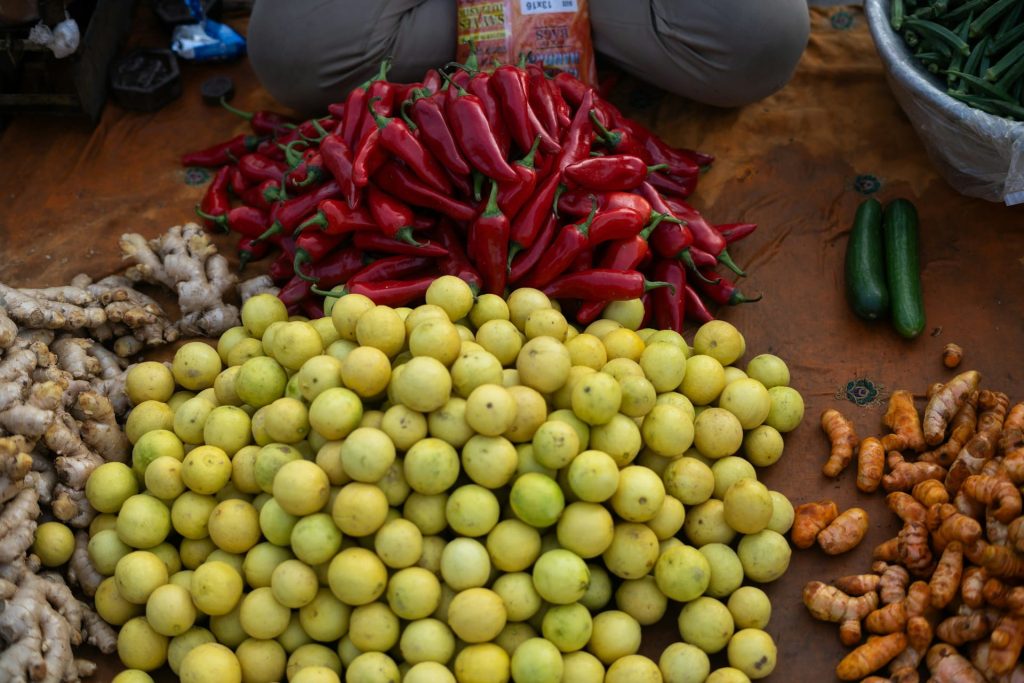
In Rwanda, a young entrepreneur has scored a major win by turning chili pepper into a new star of exports to Asia. Dieudonné Twahirwa, founder of Gashora Farm, bet on dried red chili — until then a marginal crop — to diversify Rwandan agriculture. His bold vision took him all the way to China, where in 2019 he signed a landmark deal with an importer from Chongqing.
The contract commits Gashora Farm to supplying 50,000 tonnes of dried chili per year to Chinese company GK International, worth USD 100 million annually. Over five years, that amounts to 250,000 tonnes shipped, for a total value of USD 500 million — dwarfing the traditional revenues of tea or coffee in the Land of a Thousand Hills.
The partnership, initially struck on the sidelines of the China International Import Expo (CIIE) in 2018, elevated chili to Rwanda’s number one agricultural export. “The deal will benefit our country at large, as we will be able to increase our production capacity and create more jobs, while also giving chili farmers a viable outlet for the next five years,” Dieudonné Twahirwa told the Rwandan press.
To fulfil this mega-order, Gashora Farm structured an entire supply chain: training more than 1,000 employees and smallholder farmers in drying techniques, setting up collection centres and applying rigorous quality controls. The company also diversified its offer (chili powder, hot sauce), securing a second contract with a Chinese group for 37,500 litres of chili oil.
Rwanda now ships its chili to Asia on a regular basis without incident, inspiring other African countries to explore the potential of spices in emerging markets. The Gashora story shows that with innovation and well-negotiated partnerships, an African SME can compete in niche segments and generate large-scale international revenues.
Case study 5: Sesame seeds from Nigeria
Among Africa’s Asian-focused success stories, Nigeria’s sesame sector stands out. In just a few years, this small seed has become the country’s export treasure, surpassing even cacao in value.
Grown by millions of smallholder farmers in the north of the country, sesame benefits from strong demand for oil and condiments across Asian markets.
Today, roughly 5 million Nigerians earn their living from this crop, which the authorities describe as “the most sought-after cultivar in terms of export value.” China is the driving force behind this growth: its food industry and consumers’ enthusiasm for healthy oils have caused its imports of African sesame to surge. In 2019, China purchased USD 1.08 billion worth of sesame, more than 95% of which came from Africa.
In 2023, Nigeria exported USD 459 million worth of sesame, accounting for roughly 15% of the global market value, placing it as the world’s second-largest exporter after India. This rise has benefited smallholder producers.
In some regions, farmer incomes have grown by up to 40% thanks to Asian demand and rising prices. Nigerian sesame, predominantly organic and non-GMO, appeals to Chinese buyers looking for quality and reliable supply.
Recognising the potential, the Nigerian government is backing the sector: distributing improved seeds, providing sorting machines to cooperatives, and offering financial incentives through the RT200 FX programme, which grants rebates to exporters. African integration through the AfCFTA is also easing intra-continental trade and reinforcing Nigeria’s position as a sesame hub.
The result: in 2024, the total value of African sesame exports reached USD 2.3 billion, driven largely by Chinese appetite. Once a secondary crop, sesame has become a global African success story, proving that a traditional product can find a new lease of life through Asia’s emerging markets.
Key export figures for Asia
| Product | Country | Target Asian market | Key figures |
|---|---|---|---|
| Cashew nuts | Côte d’Ivoire | India, Vietnam, China | ~350,000 t processed locally in 2024 (≈30% of harvest) |
| Dried mango | Burkina Faso | India, China, Middle East | +50% in export revenues through drying (3,800 t in 2020 → steadily rising) |
| Sesame | Nigeria | China, Japan | USD 459 M exported in 2023 (15% of global market) |
| Shea butter | Senegal | China | USD 20,000 in sales in 2024, official access to the Chinese market |
| Dried chili | Rwanda | China | Contract worth USD 100 M/year (50,000 t) over 5 years → USD 500 M |
Practical checklist for successful exporting to Asia
- Research your target market: identify the Asian countries with the strongest demand for your product (e.g. dried mango in Korea, shea in China).
- Check the standards: HACCP, ISO 22000, phytosanitary certificates, mandatory registration (such as GACC in China).
- Adapt your packaging: translations (Chinese, Vietnamese, Hindi), quality design, clear communication of origin and health benefits.
- Ensure traceability: consistent batches, quality certificates, QR codes where possible for transparency.
- Test the market: send air freight samples or small orders before committing to a full container.
- Secure financing: mobilise export credit, guarantee funds or advance payments from buyers.
- Negotiate incoterms: choose between FOB (simpler for SMEs) or CIF (more competitive if you control the logistics).
- Work with an experienced freight forwarder: essential for managing customs formalities and anticipating hold-ups.
- Train and network: attend trade fairs (CIIE, Foodex Japan, Gulfood), contact national export agencies and B2B platforms (Alibaba, IndiaMART).
- Take out insurance: transport and credit insurance to protect against non-payment and disputes.