Dried mango: standards, packaging and distribution channels in Europe
Dried mango now accounts for 42% of European imports of dried tropical fruit. This dominant position offers African agrifood SMEs a major value-creation opportunity. But the European market imposes strict requirements on quality, food safety and traceability.
This article is aimed at managers of small and micro agrifood businesses in Africa who want to export their dried mango to Europe. The goal is to give you practical tools to prepare an offer that meets standards, is well packaged and positioned on the right distribution channels.
In this article:
- European standards and compliance: avoiding import rejections
- Export packaging: protecting the product and controlling costs
- Distribution channels accessible to African SMEs
- Documents and market entry barriers: what triggers a purchase or a rejection
- Business strategy: increasing your selling price and protecting margins
European standards and compliance: avoiding import rejections
The European market applies precise standards to dried mango. Understanding these requirements will help you avoid border rejections and costly disputes with your buyers.
The UNECE DDP-25 standard: your quality reference
The UNECE DDP-25 standard defines commercial quality criteria for dried mango. It covers several key aspects that every exporter must master.
Key points to remember:
- Maximum moisture content: 15% for untreated products
- Homogeneous batches: same variety, same size, same quality within each lot
- Permitted defects: strict limits on blemishes, discolouration and impurities
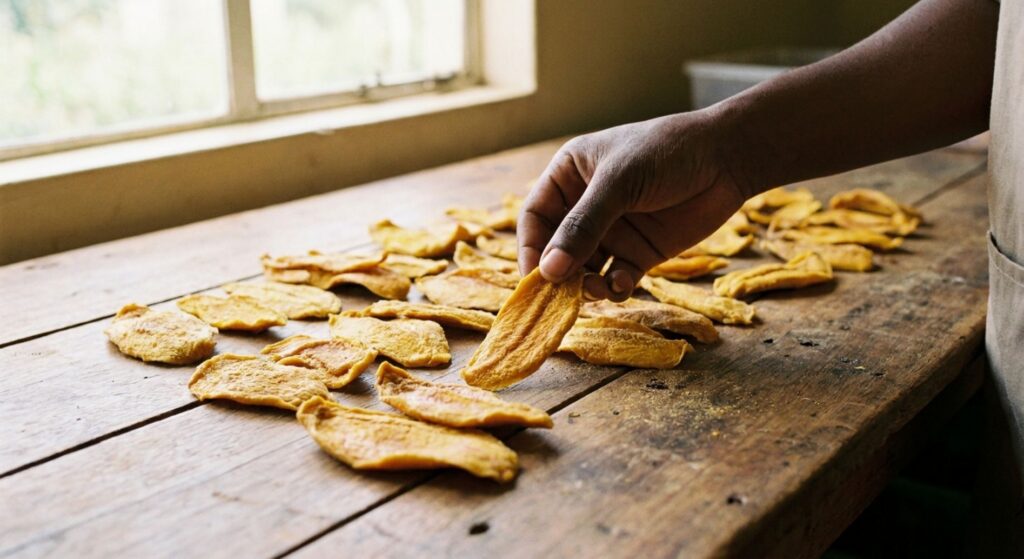
- Texture: sufficient pliability, no excessive hardening
In practice, European buyers often prefer a moisture level between 14 and 17% for so-called “soft” products. This commercial preference creates a delicate balance between technical compliance and market expectations.
Contaminants and food safety
The European Union imposes strict limits on contaminants. Aflatoxins and ochratoxin A are subject to particularly close monitoring for dried fruit.
Key actions:
- Systematically test your batches before shipment
- Keep analysis certificates as proof of compliance
- Use accredited laboratories recognised by European authorities
Single origin labelling: new 2025 requirement
Since January 2025, new European marketing rules make it mandatory to indicate the country of origin for dried fruit and nuts.
This regulatory change has several implications for African exporters:
- Stronger traceability from raw material to finished product
- Clear labelling stating the country of production
- An opportunity to promote African origin to consumers
Origin indication is becoming a commercial argument. A dried mango from Burkina Faso or Mali can stand out positively if you communicate clearly about the quality of your production practices.
Export packaging: protecting the product and controlling costs
Packaging is a strategic cost item for export success. It must protect the product, comply with food safety regulations and facilitate logistics — while remaining cost-effective.
Primary packaging: direct contact with the product
Dominant practices in the European market combine several solutions depending on the intended commercial positioning.
Common options:
- Multi-layer plastic pouches with moisture barrier
- Vacuum pouches for extended shelf life
- Modified atmosphere packaging for premium products
All materials in direct contact with dried mango must comply with European regulations on food contact materials. Request compliance certificates from your packaging suppliers.
Secondary packaging and palletisation
Reinforced cardboard is the standard solution for secondary packaging. The most commonly used formats are designed to fit Euro pallets (80 × 120 cm) to optimise container fill rates.
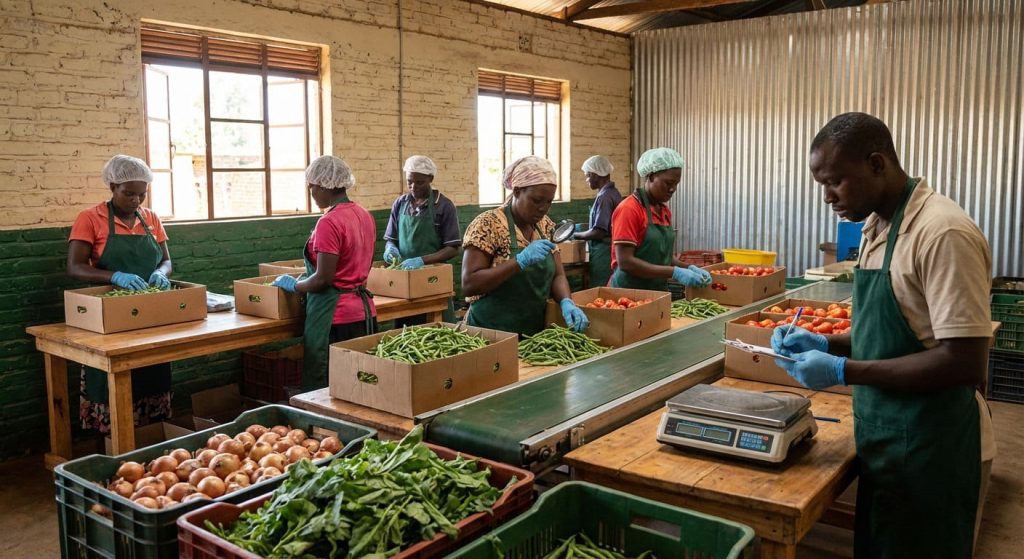
Quality control before packaging
The use of metal detectors before final packaging has become a standard practice required by European buyers.
Recommended investments:
- Metal detector on the packaging line
- Industrial-grade vacuum sealer
- Precision scale to guarantee declared weights
Poor packaging can lead to product returns, commercial penalties and lasting loss of buyer confidence. Investing in quality packaging protects your margins over the long term.
Distribution channels accessible to African SMEs
The European dried mango market offers several routes to entry. Some are better suited to the capabilities of African SMEs than others.
Specialist importers: your main entry point
Specialist importers of dried tropical fruit are the most accessible channel for getting started. They buy in bulk, handle customs clearance and redistribute to other market players.
Advantages for an SME:
- Purchase volumes suited to modest production capacity
- Importers handle import formalities
- Simpler commercial relationship with a single point of contact
Typical requirements:
- Samples that match the stated specifications
- GFSI-recognised food safety certifications
- Ability to deliver consistent volumes
Repackagers and private-label buyers
Some European buyers purchase dried mango in bulk to repackage under their own brand or a retailer’s private label. This channel offers significant volumes but demands very consistent supply.
What these buyers look for:
- Consistent quality from one batch to the next
- Ability to supply several containers per season
- Competitive prices justified by volume
Specialist channels: organic, fair trade and premium
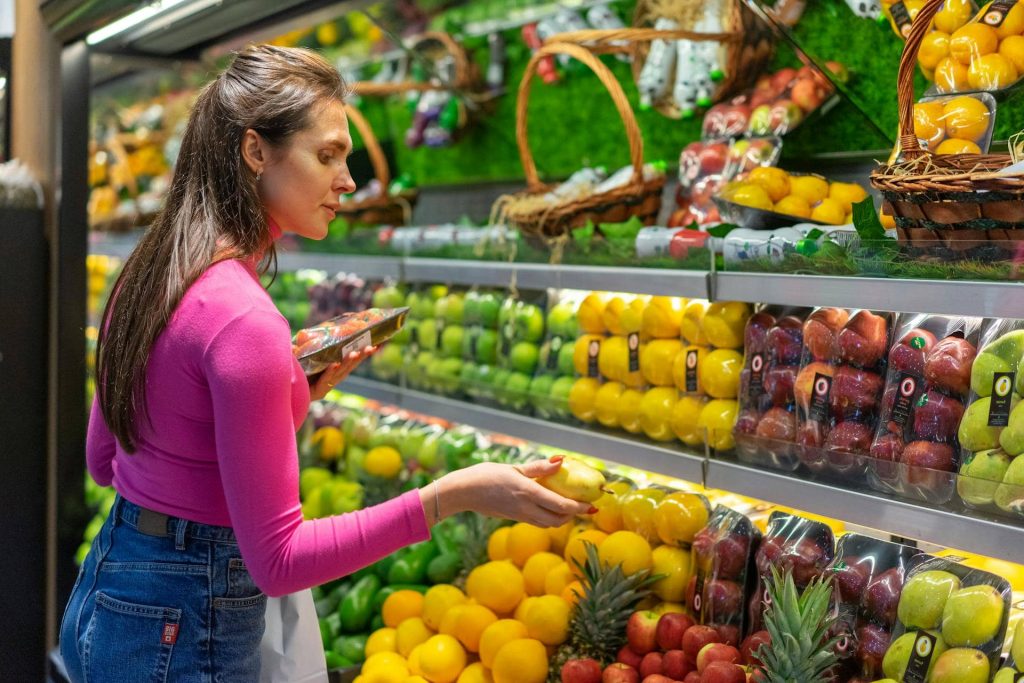
Specialist distribution channels for organic and fair-trade products offer higher-value opportunities. The average retail price of dried mango in Europe is around €30/kg, but certified organic or fair-trade products can command higher prices.
Valued labels:
- European organic certification (green leaf logo)
- Fairtrade or other fair-trade certification
- Private social responsibility certifications
B2B e-commerce and professional platforms
B2B online trade platforms give you access to European buyers without always going through traditional intermediaries. This channel remains a complementary option for African SMEs.
Start with one or two specialist importers to build your export experience. Once your reputation is established and your volumes are stable, you can explore more demanding channels such as private-label buyers.
Documents and market entry barriers: what triggers a purchase or a rejection
Documentation is the gateway to the European market. An incomplete file or insufficient proof of compliance will get your offer rejected before the product is even assessed.
Mandatory documents for export
Every shipment to Europe requires a set of documents you must have a thorough command of.
Commercial documents:
- Commercial invoice with HS code (0804.50 for dried mango)
- Detailed packing list
- Certificate of origin
Sanitary and quality documents:
- Phytosanitary certificate from the exporting country
- Contaminant analysis certificates
- Complete product data sheet
Food safety certifications
European buyers almost universally require a certification recognised by the Global Food Safety Initiative (GFSI).
Most requested certifications:
- IFS Food (International Featured Standards)
- BRC Global Standard for Food Safety
- FSSC 22000
Obtaining a GFSI certification requires a significant investment but opens access to the market’s largest buyers.
Traceability and transparency
The revised marketing rules tighten traceability requirements across the entire supply chain.
Information to document:
- Origin of the fresh mangues used
- Date and drying conditions
- Batch number enabling recall if necessary
- History of analyses carried out
What triggers a rejection
Several factors lead to an immediate refusal from European buyers.
Common grounds for rejection:
- Absence of a recognised food safety certification
- Samples that do not represent the proposed batch
- Inability to provide requested analysis certificates
- Labelling that does not comply with the 2025 rules
- Slow or imprecise responses to information requests
Do not send “enhanced” samples that do not reflect your actual production. When buyers compare the sample to the actual delivery and find a mismatch, commercial trust is destroyed instantly.
Business strategy: increasing your selling price and protecting margins
The profitability of dried mango exports depends on your ability to capture a meaningful share of the value created along the chain. Several levers can improve your positioning.
Understanding how prices are formed
The gap between the ex-works price in Africa and the retail price in Europe reveals a significant intermediary margin.
→
Europe retail price ~€30/kg
This difference is split between transport, customs duties, intermediary margins and distribution costs. Your goal is to maximise the share that comes back to you.
Levers to increase your selling price
Product quality:
- Select mango varieties recognised for their flavour
- Control the drying process to achieve optimal texture
- Ensure an attractive, consistent colour
Value-adding certifications:
- Organic certification to access premium channels
- Fair-trade label to justify a higher price
- GFSI certifications to reassure large buyers
Packaging and presentation:
- Careful packaging even for professional bulk supply
- Complete, compliant labelling from the point of origin
- Impeccable technical documentation
Reducing the cost of non-compliance
The hidden costs of non-compliance weigh heavily on profitability.
Costs to anticipate:
- Product returns and reshipping costs
- Contractual penalties for failing to meet specifications
- Destruction of batches rejected at the border
- Loss of clients and reputational damage
Investing in quality and compliance upfront costs far less than managing the consequences of a rejection.
Building lasting commercial relationships
Retaining European buyers comes down to a few key factors.
Retention factors:
- On-time deliveries on the agreed dates
- Consistent quality from one batch to the next
- Quick responses to information requests
- Transparency about any difficulties that arise
A satisfied buyer becomes your best ambassador. They can recommend you to other market players and open up new commercial opportunities without any additional prospecting effort on your part.
Frequently asked questions
What moisture level should I target for dried mango exported to Europe?
The UNECE DDP-25 standard sets a maximum of 15% for untreated products. However, European buyers often prefer a moisture level between 14 and 17% for “soft” products, which sell better commercially. Discuss the exact specifications with your buyer before production.
Which food safety certification should I prioritise?
IFS Food and BRC certifications are the most requested in Europe. Both are recognised by the Global Food Safety Initiative and open access to major distributors. The choice also depends on your target markets: IFS is more widespread in France and Germany, BRC in the United Kingdom.
What minimum volume is needed to interest a European importer?
Specialist importers can work with volumes from a single pallet or a few hundred kilograms for a first trial order. For regular orders, plan for a capacity of at least one container per season. Repackagers generally require larger volumes.
Is country-of-origin labelling really mandatory since 2025?
Yes, the new European marketing rules that came into force in January 2025 make it mandatory to indicate the country of origin for dried fruit and nuts. This obligation applies to all products placed on the European market, including imported ones.
How do I set a competitive price for my dried mango?
Research the prices charged by your competitors and the expectations of buyers. The average retail price in Europe is around €30/kg. Your FOB price must cover your production, packaging and certification costs while leaving sufficient margin for intermediaries. Organic or fair-trade certifications can justify higher prices.