
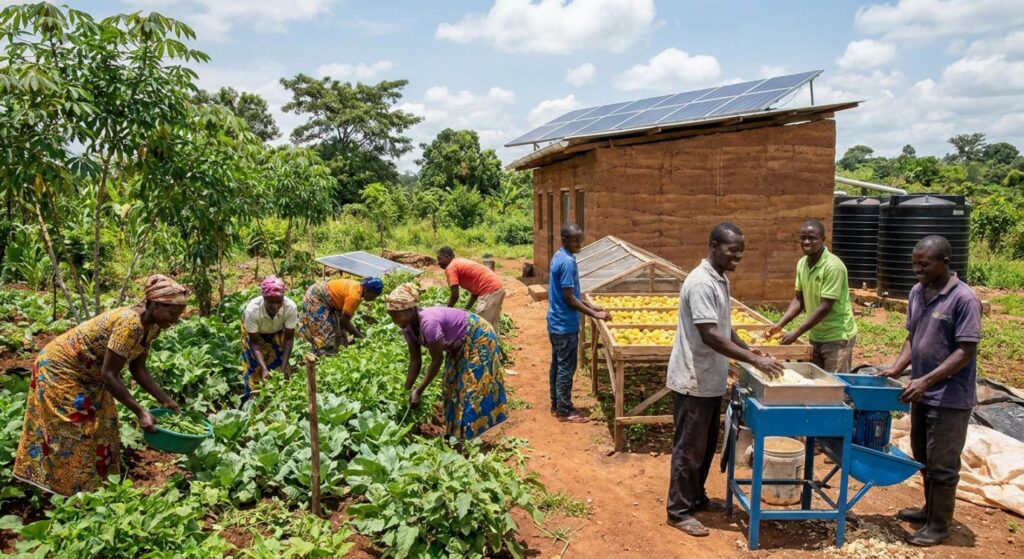
Accessing African agricultural funds: a practical guide to IFAD, FAO, and the African Development Bank
Financing remains the biggest barrier to growth for small African agrifood businesses. Yet billions of dollars are available each year through three major institutions: IFAD, FAO, and the African Development Bank. These funds specifically target the micro and small enterprises that process, market, or structure local agricultural value chains.
This article is written for owners and managers of small African agrifood businesses who want to access these resources. You will learn which funders to target based on your project, how to build a fundable application, and which channels to use to maximise your chances of securing support.
Contents:
- Which funding sources to target for your project
- Eligibility criteria and the most fundable projects
- A practical path to agricultural funds
- Documents and indicators needed to maximise acceptance
- Costs, timelines, and return on investment to plan for
Which funding sources to target for your project
Each institution funds different types of projects. Understanding these distinctions will save you time spent on calls that are not suited to your situation.
IFAD: financing rural inclusion and smallholder farmers
IFAD specifically targets poor rural populations and smallholder farmers. Its programmes consistently work through national governments, which then manage funds through implementing agencies. IFAD’s Private Sector Financing Programme mobilises private co-financing to strengthen inclusive value chains.
For a small agrifood business, direct access to IFAD is rarely an option. You need to join an existing national project or a partner producer organisation.
Key points:
- Funding flows through government projects
- Priority given to inclusive value chains
- Indirect access for small businesses (via cooperatives or partner programmes)
The African Development Bank: supporting agricultural transformation and youth employment
The African Development Bank operates at a larger scale. Its Feed Africa initiative aims to transform African agriculture into a competitive sector. The AfDB directly finances infrastructure, processing, and export competitiveness projects.
The ENABLE Youth programme has already trained and supported thousands of young agripreneurs across more than 25 African countries. It explicitly targets young agricultural entrepreneurs with both technical and financial support.
Key points:
- Transformation and competitiveness projects
- Access possible through the private sector
- Dedicated programmes for young entrepreneurs
FAO: technical assistance and pilot projects
FAO provides less direct business funding. Its main role is to deliver technical assistance, data, and pilot projects. That said, the AgriAccelerator programme supports innovative projects with intensive technical backing.
For a small business, FAO represents more a source of expertise and credibility than a direct funding window.
Eligibility criteria and the most fundable projects
African funders favour projects that meet specific criteria. Knowing these criteria allows you to position your business around the most fundable angles.
Inclusive value chains at the top of the agenda
All three institutions prioritise projects that integrate smallholder farmers into structured value chains. The goal is to build lasting commercial links between producers, processors, and markets.
A mangue processing project with contracts covering 200 smallholders will be better positioned than a standalone operation. Measurable inclusion is a decisive criterion.
Climate resilience and environmental sustainability
All programmes now include a climate dimension. Projects that demonstrate adaptation to climate change or emissions reduction score higher.
In practice, a solar drying unit or a water-efficient irrigation system strengthens the bankability of your application.
Local processing and job creation
Local agricultural processing remains an absolute priority for the AfDB. Projects that increase value added on the continent and create jobs — particularly for young people and women — carry a competitive advantage.
Key eligibility points:
- Integration of smallholder farmers into the value chain
- Climate or environmental dimension
- Measurable local job creation
- Local processing rather than export of raw commodities
- Transparent governance and demonstrated management capacity
Digital agriculture and innovation
Projects incorporating digital solutions (traceability, mobile payments, data aggregation) are growing in appeal. FAO’s AgriIntel platform reflects this push toward digitalisation across the sector.
A practical path to agricultural funds
Accessing multilateral funds does not work like a commercial bank. Several channels exist depending on your profile and level of organisational maturity.
Joining an existing national project
The most accessible route for a small business is to join a programme already funded in your country. IFAD and the AfDB finance national projects that then channel resources to final beneficiaries.
Check with your Ministry of Agriculture about active projects. The AfDB projects portal lists all ongoing programmes by country.
Joining a producer organisation or cooperative
Funders prefer collective structures. A cooperative with 50 members will secure financing more easily than an isolated individual business. Membership in an umbrella organisation opens doors to multilateral programmes.
Building a project with co-financing
Multilateral institutions almost always require co-financing. Your own contribution — even a modest one — demonstrates your commitment and your ability to mobilise resources.
→
10 to 30% of the total budget
Accessing funds through specialist intermediaries
Funds such as the ABC Fund (Agri-Business Capital Fund) act as intermediaries between major donors and agricultural SMEs. These funds accept smaller ticket sizes and provide technical support.
The ABC Fund explicitly targets African agricultural SMEs with investments ranging from $50,000 to $3 million.
Participating in AfDB sectoral programmes
The AfDB directly finances agricultural value chain projects. Its private sector operations guide details the access procedures for private companies.
Documents and indicators needed to maximise acceptance
A fundable application meets precise requirements. Funders assess your project against documented, measurable criteria.
Demonstrating project maturity
Funders finance structured projects, not ideas. You must show that your business exists, is operational, and has a verifiable track record.
Basic documents required:
- Legal statutes and official registration
- Financial statements for the past 2–3 years
- Organisational chart and CVs of key managers
- Detailed description of existing activity
Quantifying expected impact
Multilateral institutions require precise impact indicators. Your application must put figures to the expected benefits across several dimensions.
Priority impact indicators:
- Number of producers integrated into the value chain
- Jobs created (direct and indirect)
- Income increase for beneficiaries
- Volume of production processed locally
- Reduction in post-harvest losses
Demonstrating governance and management capacity
Funders assess your ability to manage funds transparently. Clear accounting, documented internal procedures, and separation of functions reassure evaluators.
Preparing a co-financing logic
Your financial plan must clearly show the amount requested from the funder and your own contribution. Co-financing sources — equity, bank credit, other partners — must be identified.
70%
20%
10%
Costs, timelines, and return on investment to plan for
Accessing multilateral funds takes time and resources. A realistic assessment of costs and benefits will help you decide where to focus your efforts.
Application preparation costs
Preparing a complete application draws on both internal and often external resources. Budget for project writing, feasibility studies, and technical support.
Hiring a specialist consultant typically costs between €2,000 and €10,000 depending on the complexity of the project.
Realistic timelines
Multilateral processes are lengthy. From initial submission to first disbursement, allow 12 to 24 months for direct projects. Existing national programmes offer faster access — generally 3 to 6 months.
→
12–24 months
|
National programme
→
3–6 months
Benefits beyond the funding
Access to multilateral funds brings advantages that go well beyond the money itself. The institutional credibility gained makes it easier to access commercial banks and international partners afterwards.
Additional benefits:
- Technical support included in the programmes
- Access to buyer and partner networks
- Strengthened management capacity
- Credibility for future financing rounds
- Compliance with international standards
Calculating the return on investment
The time invested in preparing an application must be weighed against the amounts accessible. For a €200,000 project, six months of intensive preparation remains worthwhile if the funding secured enables meaningful scale-up.
Focus your efforts on calls that best match your profile. One well-targeted application for a suitable programme is worth more than ten scattered submissions.
Frequently asked questions
Can a small business apply directly to IFAD or the AfDB?
IFAD funds exclusively through national governments. Small businesses access funds by joining existing national programmes or partner producer organisations. The AfDB accepts direct applications from the private sector for certain programmes, particularly through its credit lines for agricultural SMEs.
What is the minimum amount that can be requested from these institutions?
Direct AfDB projects generally start at several million dollars. For amounts more accessible to small businesses, intermediary funds such as the ABC Fund accept financing from $50,000. National programmes distribute grants or loans ranging from a few thousand to tens of thousands of euros.
Is co-financing always required to be eligible?
Yes, in almost all cases. Co-financing demonstrates your commitment and your ability to mobilise resources. It typically represents 10 to 30% of the total project budget. This contribution can come from equity, a bank loan, or other partners.
How do I identify active programmes in my country?
The AfDB projects portal lists all ongoing programmes by country and sector. For IFAD, contact your country’s Ministry of Agriculture or the IFAD country office. Agricultural chambers and professional farming organisations also hold information on accessible programmes.
Which agricultural sectors receive the most funding currently?
Basic food value chains (cereals, legumes, tubers) remain a priority for food security. Export value chains (cacao, coffee, cajou, tropical fruits) attract funding linked to competitiveness. Livestock and aquaculture are gaining weight in funder portfolios.
Is technical support included in the funding?
Most multilateral programmes include a technical assistance component. This support typically covers business management, quality standards, market access, and sometimes certification. This non-financial support often delivers as much value as the funding itself.
Accessing African agricultural funds: a practical guide to IFAD, FAO, and the African Development Bank
Agricultural financing remains one of the main challenges facing small African agrifood businesses. While the sector accounts for between 25% and 35% of GDP in many sub-Saharan African countries, it attracts only 5 to 7% of outstanding bank credit. This gap directly slows the growth of micro and small enterprises that nevertheless perform essential functions across value chains: collection, processing, storage, and distribution.
This article is written for owners and managers of small and micro agrifood businesses in Africa who want to access funding from IFAD, FAO, and the African Development Bank. The aim is practical: to help you identify the right windows, structure a fundable project, and maximise your chances of securing financial and technical support.
In this article:
- Which funding sources to prioritise
- Eligibility criteria and the most fundable projects
- The path to funding: channels and concrete entry points
- Documents and indicators needed to maximise acceptance
- Costs, timelines, and return on investment to plan for
Which funding sources to prioritise
Each institution funds different types of projects and uses distinct access channels. Understanding these specifics helps you avoid wasting time on calls that do not match your profile.
IFAD: financing smallholder farmers and rural SMEs
The International Fund for Agricultural Development primarily targets poor rural populations and smallholder farmers. Its Private Sector Financing Programme (PSFP) aims to mobilise private investment for the benefit of rural businesses and small farmers.
IFAD does not generally fund individual businesses directly. It works through intermediaries: microfinance institutions, impact investment funds, producer organisations, and national programmes. The Agri-Business Capital Fund, for example, specifically targets agrifood SMEs in sub-Saharan Africa with investment ticket sizes suited to small structures.
Key point: IFAD is relevant if your project is part of an inclusive value chain, if you work with smallholder farmers, or if you can access funding through a cooperative or partner investment fund.
FAO: technical support and investment catalyst
The Food and Agriculture Organization of the United Nations does not operate as a traditional funder. Its primary role is to support governments and facilitate access to financing through structuring programmes.
The Hand-in-Hand initiative provides a geospatial reference system with over 2 million data layers to identify areas with high agricultural investment potential. The AgrInvest programme works directly with national development banks to improve financing for agricultural value chains. In Uganda, for example, AgrInvest is supporting the Uganda Development Bank on green finance.
Key point: FAO is relevant if you are looking for technical support to make your project bankable, or if you want to integrate into a national programme backed by the organisation.
The African Development Bank: large-scale financing and sectoral programmes
The AfDB holds the largest financial envelopes and targets the structural transformation of African agriculture. Two programmes deserve particular attention for agrifood businesses.
The Technologies for African Agricultural Transformation (TAAT) programme has already deployed resilient technologies across more than 35 million hectares and improved the incomes of over 25 million farmers. It finances the adoption of improved varieties, climate-smart practices, and processing innovations.
The Special Agro-Industrial Processing Zones (SAPZ) aim to create integrated agrifood processing hubs, complete with infrastructure, business services, and improved market access.
Key point: The AfDB suits processing and industrialisation projects, and businesses ready to integrate dedicated zones or adopt proven technologies at scale.
Eligibility criteria and the most fundable projects
The three institutions share common priorities but apply specific criteria. Aligning your project with these expectations significantly increases your chances of funding.
The five priority themes
Inclusive value chains: projects that integrate smallholder farmers into structured supply chains are consistently favoured. In practice, this means supply contracts with cooperatives, transparent value-sharing mechanisms, and supplier training.
Rural entrepreneurship and youth employment: projects that create jobs — particularly for young people and women in rural areas — benefit from favourable evaluation criteria. Always quantify the number of direct and indirect jobs generated.
Climate resilience: since 2022, the climate dimension has become central. Projects incorporating drought-resistant varieties, improved water management, agroecological practices, or crop insurance schemes are prioritised.
Digital agriculture: digital solutions for traceability, stock management, market access, or production data collection meet funder expectations, as they are looking for projects that are measurable and manageable.
Processing and value chain development: projects that locally process agricultural raw materials are particularly valued, as they capture more added value on the continent.
Eligible business profiles
Micro and small businesses rarely access the three institutions’ funds directly. Access typically runs through:
- A producer organisation or cooperative of which you are a member or partner
- A national programme funded by IFAD, FAO, or the AfDB in your country
- A partner microfinance institution or development bank
- An impact investment fund supported by these funders
Key points: Formalising your business (trade register, bank accounts, regular bookkeeping) is an almost universal prerequisite. Entirely informal businesses cannot access these funds directly.
The path to funding: channels and concrete entry points
Accessing funds from IFAD, FAO, or the AfDB requires understanding the institutional channels and identifying the right entry points for your situation.
First channel: working through the state and national programmes
The majority of funding flows through governments. IFAD, for example, negotiates loan agreements with states, which then implement national programmes through project management units.
To identify active programmes in your country, check the IFAD website (projects by country section), contact the Ministry of Agriculture or Rural Economy, and enquire with agricultural chambers or professional associations in your sector.
These programmes often include direct enterprise financing components: equipment grants, competitive innovation funds, and credit lines through local financial institutions.
Second channel: joining a producer organisation
Cooperatives and producer organisations are a preferred channel. They aggregate financing needs, pool guarantees, and give funders an identifiable governance structure to work with.
If you are a processing business, establishing formal partnerships with producer cooperatives can open access to joint financing: you invest in processing capacity while the cooperative receives support to improve the quality and volume of its deliveries.
Third channel: co-financing with private investors
All three institutions aim to mobilise private funds alongside public resources. IFAD’s Private Sector Financing Programme uses guarantee and risk-sharing instruments to attract investors into agricultural projects.
For a small business, this can mean approaching an impact investment fund that benefits from an IFAD or AfDB guarantee. These funds accept smaller ticket sizes and risk profiles that commercial banks would turn down.
Fourth channel: FAO technical programmes
FAO can help you structure a fundable project even without directly financing it. Its technical support programmes help businesses improve their practices, document their impact, and comply with quality standards.
Going through a technical support process strengthens your credibility with other funders and makes it easier to access larger financing later on.
Documents and indicators needed to maximise acceptance
A strong financing application meets precise expectations. All three institutions systematically assess several dimensions.
Project maturity and implementation capacity
Your application must demonstrate that you have the technical, organisational, and financial capacity to implement the project. Prepare:
- A detailed business plan with financial projections over 3 to 5 years
- A clear description of your team and its skills
- An activity track record and references (client contracts, existing partnerships)
- The company’s legal documents (trade register, statutes, licences)
Measurable impact on incomes and employment
Funders finance results, not activities. Always quantify:
- The number of producers or suppliers impacted
- The expected increase in their incomes (as a percentage and in absolute value)
- The number of jobs created or secured
- The productivity or yield gains projected
Contribution to food security
Explain how your project improves the availability, accessibility, or nutritional quality of food. Local processing projects that reduce post-harvest losses or improve preservation are particularly valued.
Governance and transparency
Institutional funders require clear accounting, documented decision-making processes, and the absence of conflicts of interest. Having a named accountant, annual accounts, and a board of directors or management committee strengthens your credibility.
Co-financing logic
Projects entirely funded by a single funder are rare. Show that you are bringing your own contribution (equity, existing equipment, land) and that you have identified other complementary funding sources.
Key points: A personal contribution of 10 to 30% of the total project cost is generally expected. This demonstrates your commitment and reduces the perceived risk for the funder.
Costs, timelines, and return on investment to plan for
Accessing institutional funds takes time and resources. Weigh these upfront investments carefully before deciding whether this route suits your situation.
Application preparation costs
Preparing a solid financing application draws on several types of resources:
- Time from the owner and team to gather information and write the application
- Where needed, fees for a consultant or advisory firm to structure the business plan
- Formalisation costs if your business needs to regularise its administrative status
- Certification or compliance costs if the project requires them
For a small business, allow between 2 and 6 months of preparatory work depending on the project’s complexity and your initial level of organisational maturity.
Processing timelines
Timelines vary considerably depending on the access channel:
3 to 6 months
4 to 9 months
12 to 24 months
Expected return on investment
Accessing these funds generates several types of benefits:
Direct financial benefit: financing terms (interest rates, duration, grace periods) are generally more favourable than those from commercial banks. Some programmes include a grant component that reduces the total cost of financing.
Capacity building: the associated technical support improves your management practices, compliance with standards, and market access.
Institutional credibility: having been financed by IFAD, FAO, or the AfDB makes it easier to access other funding sources afterwards. It signals quality to banks, investors, and institutional clients.
Market access: integration into structuring programmes can open commercial opportunities: contracts with institutional buyers, access to export markets, participation in trade fairs.
→
Access to structuring finance + strengthened credibility
Focusing efforts on the best-positioned projects
Not every project justifies the effort of pursuing institutional funds. Prioritise this route if:
- Your financing need exceeds the capacity of local sources (microfinance, commercial banks)
- Your project has strong, measurable potential impact on producers and employment
- You are prepared to meet reporting and governance requirements
- You can mobilise a significant level of co-financing
For more modest financing needs or less structured projects, microfinance institutions, national SME support programmes, or entrepreneur networks may offer faster and less demanding access.
Frequently asked questions
Can a micro-enterprise apply directly to IFAD or the AfDB?
No, these institutions do not generally fund individual businesses directly. Access runs through national programmes, producer organisations, microfinance institutions, or partner investment funds. Start by identifying active programmes in your country and sector.
What is the minimum funding amount accessible through these programmes?
Amounts vary by access channel. Through a partner microfinance institution, ticket sizes of a few thousand euros are possible. Impact investment funds generally target amounts from €50,000 to €500,000. State-led projects involve larger envelopes.
Is formalisation required to access this funding?
Yes, formalisation is an almost universal prerequisite. You need a trade register entry, a professional bank account, and regular bookkeeping. Entirely informal businesses cannot access these funds directly.
How long should I allow between submitting an application and receiving the first disbursement?
Timelines range from 3 months for an existing national programme with simplified procedures to 12–24 months for a new project negotiated with the state. Allow at least 6 months for a standard process through an investment fund or partner financial institution.
Are agrifood processing projects prioritised?
Yes, local processing of agricultural raw materials is an explicit priority for all three institutions. These projects capture more added value, create jobs, and reduce import dependency. They often benefit from favourable evaluation criteria.
How much co-financing should I plan to contribute?
A personal contribution of 10 to 30% of the total project cost is generally expected. This can include equity, existing equipment, or land. It demonstrates your commitment and reduces the perceived risk for the funder.