Every year, a significant share of the fruit and vegetables produced in Africa is lost before it ever reaches the consumer. This article is aimed at leaders and managers of African SMEs dealing with post-harvest losses.
It covers the scale of the problem in West and East Africa (with a focus on mango, tomato and banane plantain), and the economic impact on the agrifood sector. Proven, affordable and locally suited solutions — solar dryers, mobile cold rooms, improved packaging and more — already exist to cut post-harvest losses.
The goal is to provide recent data (2024–2025) and concrete feedback from local cooperatives and SMEs, to help sector players better understand the issues and identify effective courses of action.
Contents:
- West Africa – Key figures and challenges
- East Africa – Key figures and challenges
- FAQ – Frequently asked questions
West Africa: key figures and challenges in post-harvest losses
In West Africa, post-harvest losses of fruit and vegetables have reached alarming levels, often well above the global average. According to the FAO, up to 50% of fruit and vegetables harvested in sub-Saharan Africa deteriorate before they are consumed — the highest rate in the world.
These losses deprive the region of enormous quantities of food and represent a substantial economic shortfall. Estimates suggest that more than USD 4 billion worth of food is lost every year in sub-Saharan Africa due to post-harvest waste. Behind these aggregate figures, significant disparities exist across countries and crops, with some supply chains hit particularly hard.
Here is a selection of recent comparative data on post-harvest losses in the region:
| Country | Crop | Losses (%) | Estimated impact |
|---|---|---|---|
| Nigeria | Tomato | ≈ 45% | ~1.8 million tonnes lost/year |
| Côte d’Ivoire | Mango | 30–35% | ~3.3 billion FCFA in losses/year |
| Kenya | All fresh produce | ≈ 40% | ~3 million people affected |
The three flagship crops of the West African region — mango, tomato and banane plantain — are among the most affected:
Mango:
The mango sector is a significant export industry in West Africa (Mali, Burkina Faso, Côte d’Ivoire, Sénégal, etc.), yet it is plagued by heavy losses.
- In Côte d’Ivoire, the third-largest West African producer, only a fraction of the harvest is actually sold: of approximately 150,000 tonnes of mangoes produced in 2024, only 32,000 tonnes were exported to Europe. Much of the remainder is consumed locally or lost for lack of processing capacity.
- Producers face a serious phytosanitary threat in the form of fruit flies, which can render entire consignments unsaleable. During severe infestations, orchard losses can reach up to 60% of production.
- The cooperative “Faso Mango” in Burkina Faso, for example, reported losing nearly 30% of its mango raw material in 2023 to fruit fly damage — more than 100 tonnes of spoiled fruit out of 530 tonnes collected. This translates into revenue losses of around 12 to 13 million FCFA per season for that cooperative alone.
Tomato:
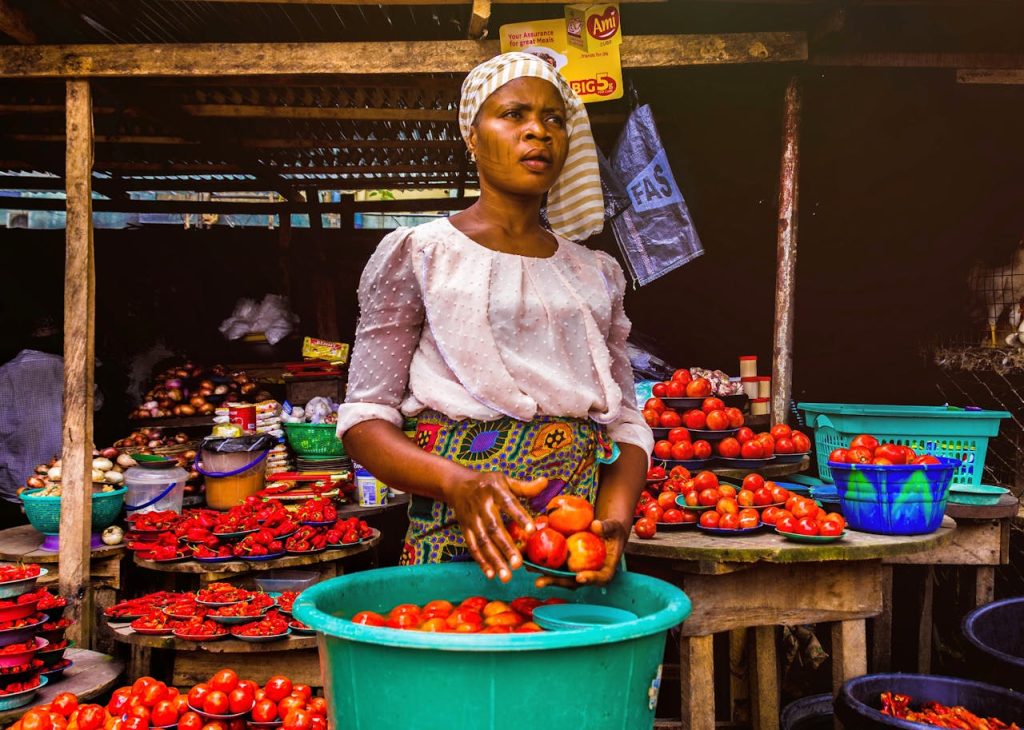
Tomato is one of the most widely grown and consumed vegetables in West Africa, and also one of the most affected by post-harvest losses.
- In Nigeria, the region’s largest producer, around 45% of the tomato harvest (from roughly 4 million tonnes per year) is lost along the value chain each year. That amounts to approximately 1.8 million tonnes wasted — a paradox for a country that nevertheless imports large volumes of tomato paste due to insufficient local processing capacity.
- The causes are multiple: inadequate packaging (tomatoes are often transported loose in sacks where they are crushed), a lack of cold storage, and slow delivery to markets, among others.
- Across the rest of West Africa (Ghana, Bénin, Sénégal…), tomato losses are commonly estimated at between 30 and 50%, depending on the area — especially during peak production seasons when supply outstrips storage and sales capacity.
Banane plantain: A staple food in several West African countries (Côte d’Ivoire, Ghana, Nigeria, Cameroun…), banane plantain also suffers significant post-harvest losses, though somewhat lower than for more fragile fruits.
- Figures vary, but studies put post-harvest losses of plantain at generally between 30 and 40% of production, due to poor storage conditions and handling damage during transport.
- In Cameroun and Côte d’Ivoire, for example, official estimates (from Ministries of Agriculture) point to losses of up to 30–35% along the entire supply chain (from field to market). Plantains harvested very green for sale can ripen and rot within days if not sold or processed in time. Repeated handling and inadequate packaging — bunches stacked in unprotected trucks — also cause bruising that accelerates spoilage.
These high losses in West Africa carry major economic and social consequences: reduced market supply out of season (pushing prices up), lower income for farmers (who cannot sell part of their production), and worsening food insecurity. In rural areas, labour and inputs are wasted, discouraging producers.
At the macroeconomic level, dependence on food imports deepens — Nigeria and Ghana, for instance, import tomato paste and onions while part of their own harvests rots in the fields.
Illustration – Losses by crop: West Africa vs East Africa:
| Crop | Losses in West Africa | Losses in East Africa |
|---|---|---|
| Mango |
50% |
40% |
| Tomato |
45% |
30% |
| Banane plantain |
35% |
20% |
Chart: Estimated post-harvest loss rates by crop, West Africa vs East Africa (as a percentage of production, 2024). ■ West Africa – ■ East Africa.
East Africa: key figures and challenges in post-harvest losses
In East Africa, post-harvest losses are just as critical a problem, though the situation varies from country to country. Overall, between 30 and 50% of fruit, vegetables and perishable goods can be lost after harvest in this region as well.
In Kenya, for example, a 2024 report found that nearly 40% of national food production is wasted each year — around 9 million tonnes of food lost. This striking figure comes with an economic cost of approximately 72 billion Kenyan shillings (close to USD 580 million) per year, even as a significant portion of the population faces food insecurity.
East Africa — which includes major fruit and vegetable producers such as Kenya, Uganda, Tanzania and Ethiopia — therefore suffers losses comparable to those in West Africa, with some regional specificities.
Looking at the three target crops:
Mango: Countries like Kenya and Uganda are producing growing volumes of mangoes, but the sector has long been penalised by pests and limited export market access.
- Between 2010 and 2020, Kenya suspended its mango exports to Europe entirely due to fruit fly infestations that led to systematic rejection of consignments. During that period, an estimated 40 to 50% of Kenyan mangoes were lost post-harvest for lack of adequate solutions.
- The good news is that aggressive phytosanitary control and quality improvement measures are paying off: since 2022, Kenyan producers have managed to cut fruit fly losses to around 20% of the harvest, paving the way for a resumption of exports to the EU.
- Uganda, for its part, is developing local processing (mango juice, dried fruit) to absorb seasonal surpluses and reduce waste.
Tomato: East Africa has major tomato-producing areas (the Rift Valley highlands in Kenya, and parts of Tanzania and Ethiopia, for example).
- Post-harvest tomato losses in the region are estimated at around 30 to 40% on average — similar to West Africa, though somewhat lower in areas where infrastructure is beginning to develop.
- In Kenya and Tanzania, the growth of supermarkets and processing units (sauce and paste production) is helping to absorb surplus output. In traditional marketing channels, however, tomatoes continue to suffer from inadequate packaging.
- Field observations show that piling tomatoes in sacks during transport causes losses of up to 35–40% through crushing, while using plastic crates brings those losses down to around 8%.
- Innovative SMEs such as FreshCo Uganda have introduced crates and better-ventilated trucks, dramatically reducing damage during transit to markets.
Banana (banane plantain and cooking banana): East Africa — particularly Uganda, the world’s largest per-capita consumer of cooking bananas, and Tanzania — grows enormous quantities of bananas, which are a daily staple food. Paradoxically, this helps explain why post-harvest losses for plantain and cooking banana varieties are relatively lower here.
- In Uganda, a study found that only ~15% of cooking bananas suffer significant post-harvest degradation — a more moderate rate, thanks to rapid turnover in local markets and high daily consumption.
- Most bunches are sold or consumed before they spoil completely, and even over-ripe ones can be processed (into banana beer, fritters, etc.).
- That said, when it comes to bananas destined for export (dessert bananas) or plantain surpluses during peak season, the storage challenges are the same as in West Africa. Without ripening rooms or refrigeration in rural areas, local losses of 20–30% can occur for bananas that are not sold in time.
Beyond the percentages, the economic implications for East Africa mirror those described for West Africa. Fruit and vegetable losses deprive farmers of income (fewer products sold), push consumer prices up during lean periods, and waste agricultural inputs. Quality deterioration — damaged produce sold at a discount — also erodes supply chain profitability. At the national level, countries like Kenya and Ethiopia have identified post-harvest loss reduction as a key lever for improving food security without dramatically expanding cultivated land.
Cutting losses allows a country to put more produce on the domestic and export market, stabilise prices and raise rural incomes. Several public and private initiatives are emerging in East Africa to address this challenge.
The Kenyan government, for example, is investing in agrifood logistics hubs and regional cold storage facilities. Uganda is encouraging the formation of producer cooperatives to pool storage and processing resources. Despite these efforts, large volumes of produce continue to be wasted because suitable equipment remains out of reach for most smallholders. This is why low-cost, easily scalable solutions are essential to tackling the problem effectively, as outlined below.
FAQ – Frequently asked questions
Q1. What are “post-harvest losses” and why do they matter?
Post-harvest losses refer to the share of agricultural production that deteriorates after harvest before reaching the consumer. They represent a waste of food, money and resources. Reducing them means feeding more people and improving producer incomes.
Q2. What are post-harvest loss rates in West and East Africa?
Across Africa, 30 to 50% of fruit and vegetables are lost after harvest. In West Africa, losses often reach 40–50%; in East Africa, around 30–40%. Some crops do better — cooking bananas in Uganda, for instance, see losses of only 15%.
Q3. What are the main causes of post-harvest losses?
The main causes are: hot and humid climates, lack of storage infrastructure, pests, poor transport conditions and seasonal overproduction. Limited training among supply chain actors also compounds the problem.
Q4. What low-cost solutions exist to reduce these losses?
Effective solutions include solar dryers, mobile cold rooms, rigid plastic crates and local processing (juice, jam, dried products). These accessible technologies can cut losses by half and improve incomes.
Q5. What economic gains can be expected?
Reducing post-harvest losses can recover billions of USD in value each year. For SMEs and producers, this means higher sales volumes, a 15 to 30% increase in revenues and greater stability in food markets.