European buyers are increasingly turning away shipments of cacao, cajou or spices for a single reason. The exporter cannot prove exactly where the product came from, or whose hands it passed through before shipping.
This is no longer a question of product quality. It is a question of documentary proof. EU food safety regulations have required every operator, including importers, to identify their direct supplier and direct customer for each lot sold since 1 January 2005. This is the so-called “one step back, one step forward” principle (Regulation EC 178/2002, article 18).
From 2026, this regulatory foundation tightens further with the EU Deforestation Regulation (EUDR), which requires precise geolocation of plots for cacao and coffee. In Côte d’Ivoire, the producer card is now mandatory for any commercial transaction from 1 September 2026.
This guide explains what the owner of an African agrifood micro or small enterprise needs to put in place concretely to export without risking a border hold-up, and how to turn this constraint into a commercial argument with buyers.
- Why traceability has become a condition for exporting to Europe
- What an exporter must be able to prove, from field to shipment
- The traceability mistakes that cost exporters contracts
- What reliable traceability costs, and how to finance it
- Cacao, coffee, cajou: traceability already mandatory in African supply chains
- Frequently asked questions about traceability for export
Five regulatory and commercial mechanisms, often poorly understood by small businesses, explain how traceability moved from a simple mark of professionalism to a condition of entry into the European market.
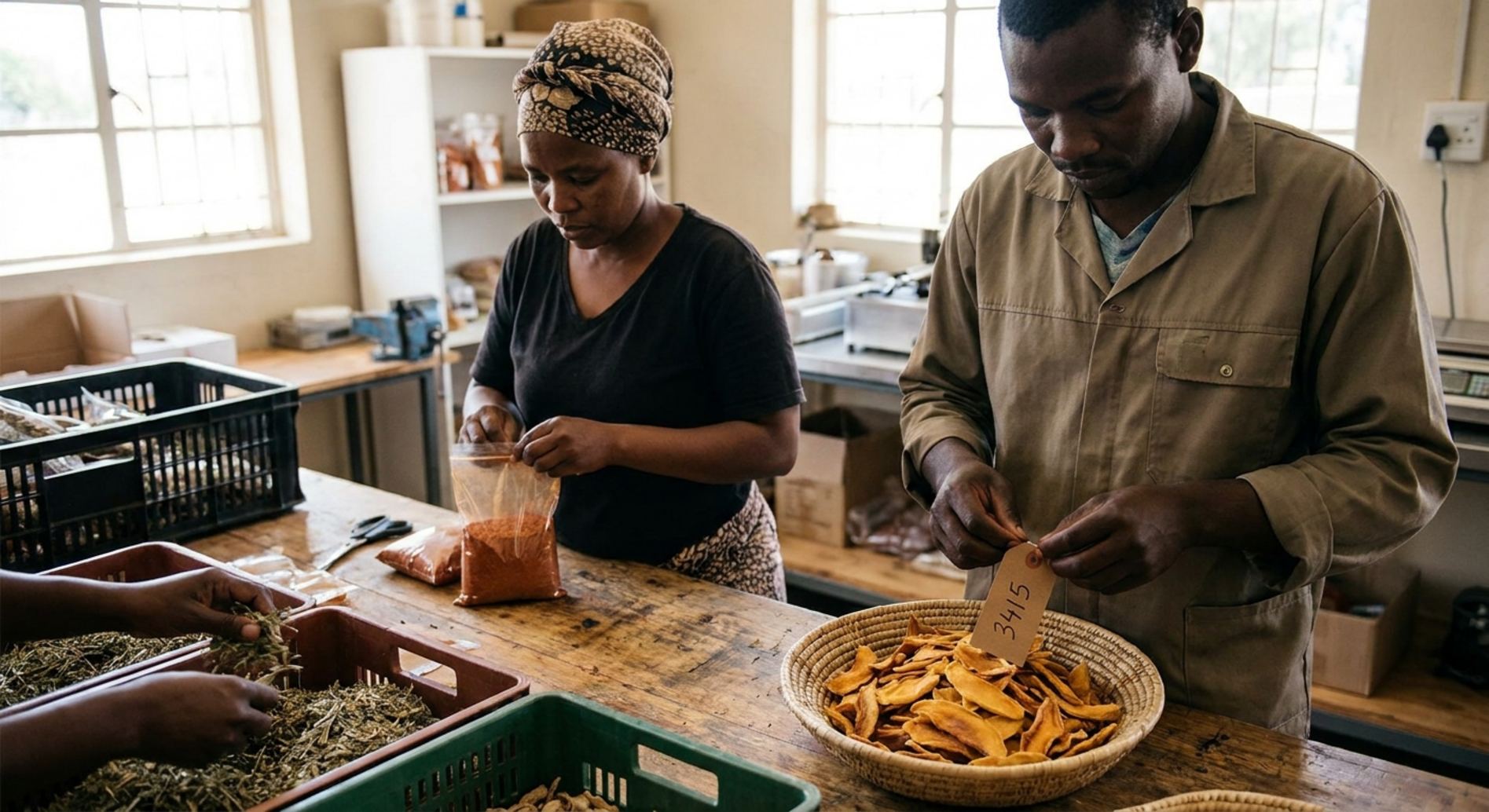
Why traceability has become a condition for exporting to Europe
The first text to know is Regulation EC 178/2002, known as the “Food Law”. Its article 18 requires every operator in the food chain — producer, processor, exporter, importer — to identify who supplied them with the product and to whom they supplied it. This obligation has applied since 1 January 2005 (article 65 of the regulation).
A second text structures controls at the EU border: Regulation (EU) 2017/625, known as the “official controls regulation”. It governs sanitary and phytosanitary checks on foodstuffs, and relies on the digital platform TRACES to manage the electronic certificates required on import (European Commission, TRACES).
These obligations are not theoretical. They rest on an active alert system, the RASFF (Rapid Alert System for Food and Feed), which records every non-compliance notification detected on the European market. In 2024, this network logged 5,250 RASFF notifications, up 12% year on year, for a total of 9,460 notifications across all networks (RASFF, fraud, administrative assistance). In 2025, volumes continued to rise: 5,344 RASFF notifications and 10,490 notifications in total, up 11% (Mérieux NutriSciences, annual ACN network report).
A product that cannot justify its origin, its lot numbers and its logistical journey is no longer simply seen as risky. It becomes an automatic ground for rejection by a European buyer or distributor who is itself subject to upstream traceability obligations.
Over the 2008–2023 period, a bibliometric study shows that border rejections account for 38.7% of all RASFF notifications, with mycotoxins (aflatoxins leading) driving 42.94% of rejection cases, and pesticide residues driving 55.33% of alerts (Sustainability, 2025). Both categories directly affect Africa’s most exported products: groundnuts, maize, spices and dried fruit.
| Indicator | 2024 | 2025 |
|---|---|---|
| RASFF notifications (strict food safety) | 5,250 (+12% vs 2023) | 5,344 (+2% vs 2024) |
| ACN network notifications (RASFF + fraud + assistance) | 9,460 | 10,490 (+11% vs 2024) |
| Share related to food (excluding animal feed) | Not precisely disclosed | 92% |
Source: European Commission, DG SANTE, annual report of the ACN (Alert and Cooperation Network); Mérieux NutriSciences.
Key takeaways
- A legal obligation, not an option – since 2005, every exporter to the EU must identify their direct supplier and direct customer for each lot.
- An active alert system – over 5,000 RASFF notifications per year, rising steadily since 2023.
- Systematic controls – Regulation 2017/625 and the TRACES platform govern the certificates required at every point of entry into the EU.
What an exporter must be able to prove, from field to shipment
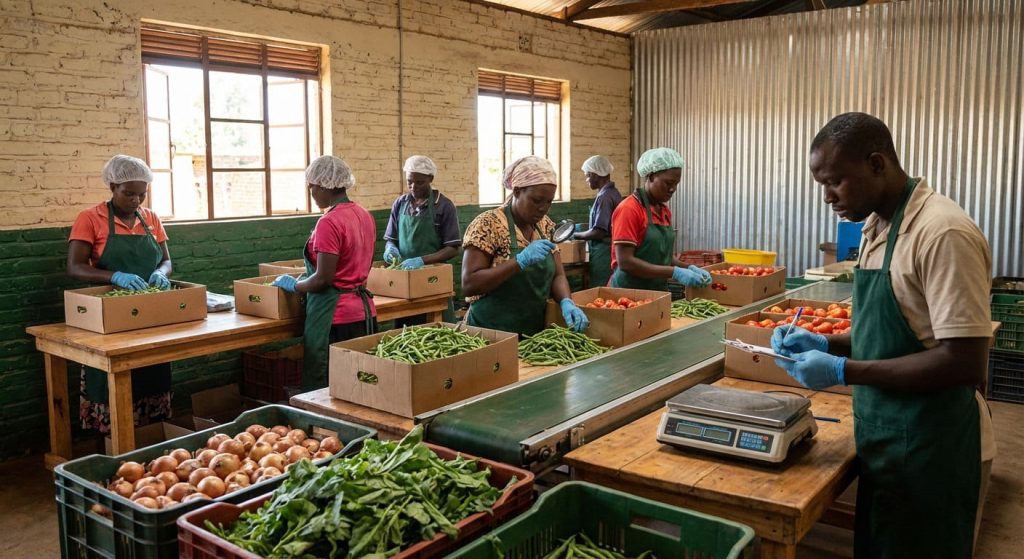
In practice, a solid traceability file must answer seven straightforward questions for each shipment: what raw material, which producer or origin zone, what lot number, what processing steps, what storage conditions, what packaging, and which end customer.
The first building block, often overlooked, is lot coding. A simple numbering system linked to a barcode makes it possible to retrieve a product’s complete history within minutes when a buyer or control authority asks. In Cameroon, GS1 offers lot coding at 10,000 FCFA per code, as a one-off payment with no annual subscription, with room to negotiate depending on company size (GS1 Cameroun).
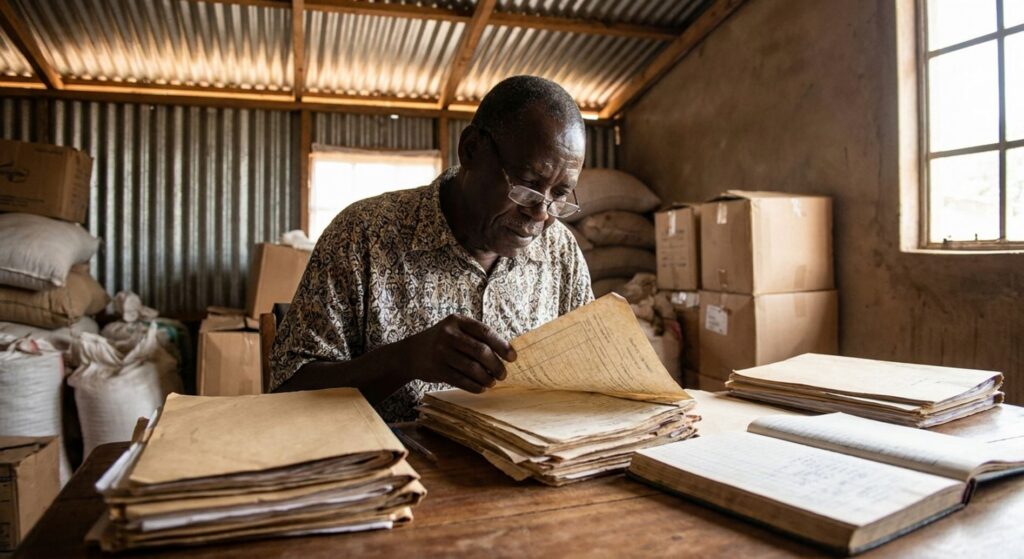
The second building block is the supplier record. It must specify the supplier’s identity, the precise geographical origin of the raw material, the date of receipt, and where possible a verifiable contact. Without this record, tracing “one step back” as required by Regulation 178/2002 is simply impossible.
The third building block is the processing and storage register: dates, temperatures for sensitive products, shelf life, packaging conditions. This register is what allows an exporter to demonstrate that a lot was not contaminated or mixed with another between receipt and shipment.
The fourth building block is the sanitary or phytosanitary electronic certificate, managed via TRACES for products of animal or plant origin. Without this document, the product does not cross the European border, regardless of its actual quality.
These four building blocks are not just a regulatory requirement. Major European distributors and importers check them before signing a contract, often through a document or on-site audit. An exporter who can spontaneously present their lot register and supplier records at a first meeting saves valuable time in the sales process, and avoids the back-and-forth that often derails negotiations before the first container is even shipped.
| Document or proof | What it must contain | Regulatory basis |
|---|---|---|
| Supplier record | Identity, geographical origin, date of receipt | Regulation EC 178/2002, art. 18 |
| Lot register | Lot number, quantity, processing dates | Regulation EC 178/2002, art. 18 |
| Storage register | Storage conditions, duration, packaging | HACCP good practices |
| Sanitary / phytosanitary certificate | Compliance for EU entry, via TRACES | Regulation (EU) 2017/625 |
The traceability mistakes that cost exporters contracts
Three mistakes come up most often among African agrifood SMEs that fail to secure an export contract or see a shipment held at the border.
The first is the complete absence of lot coding. Without a lot number, it is impossible to respond quickly to a tracing request, which almost always triggers suspicion of non-compliance from the buyer.
The second is the inability to document geographical origin precisely. In Uganda, between 2015 and 2024, over 787 interceptions of agricultural products at EU entry points were caused by pests (70% involving fruit and vegetables), and 308 others by simple documentary errors, of which 71% also concerned fruit and vegetables, according to EUROPHYT and TRACES data cited in the European Commission’s non-compliance report of December 2024 (AGRINFO platform).
The third is a lack of resources to absorb the cost of compliance. A study by AVSF (Agronomes et Vétérinaires Sans Frontières) with Commerce Équitable France on the cacao supply chain highlights that the investment needed to meet georeferencing and traceability requirements amounts to several tens of thousands of euros per year for a cooperative — a sum completely out of reach for producers living on less than two dollars a day without outside support (AVSF, Programme Équité study).
Historically, this documentary weakness has weighed more heavily on African exports than on other regions. An academic study covering the period 2008–2013 shows that seafood (fish, crustaceans, molluscs) alone accounted for 40.56% of EU border rejections for African products, with Morocco (17%), Egypt (16%), Ghana (13%) and Nigeria (10%) topping the list of affected countries (European Journal of Development Research, 2022). These figures predate the widespread rollout of the digital traceability systems described below, but they illustrate a structural vulnerability that remains relevant as long as documentation is not made reliable.
On the other hand, getting documentation in order opens real commercial potential. In Uganda, an SPS improvement project is presented as capable of unlocking up to 150 million dollars in additional revenue for the country’s horticultural sector alone, by reducing rejections linked to documentary non-compliance (CABI). Traceability is therefore not just a cost to absorb — it is also a revenue driver for companies that put it in place before their competitors.
What reliable traceability costs, and how to finance it
Setting up credible traceability does not necessarily require investing in an expensive system. For a business just starting out, the essentials come down to three low-cost elements: a paper or spreadsheet lot register, standardised supplier records, and simple product coding.
Barcode coding remains the most accessible investment. The rate charged by GS1 Cameroun — 10,000 FCFA per code as a one-off payment — gives a useful benchmark for businesses beginning a formal traceability process (GS1 Cameroun).
For businesses aiming at more advanced compliance, particularly regarding the EUDR, costs rise significantly, especially at cooperative level where a large number of plots must be geolocated. This is the finding of the AVSF study cited above, which puts this effort at several tens of thousands of euros per year for a medium-sized cooperative.
Several international programmes exist to finance or support this compliance process. The West Africa Quality System Programme (PSQAO), funded at 12 million euros by the European Union under the 10th European Development Fund and implemented by UNIDO, has supported the quality infrastructure of ECOWAS countries since a framework agreement signed on 28 August 2014 (PSQAO). The Fit For Market programme, run by COLEACP for ACP-EU cooperation, has a budget of 25 million euros, of which 20 million comes from the 11th European Development Fund, over five years. It received 773 requests for support, of which 494 were converted into concrete assistance projects for agrifood SMEs (COLEACP, Fit For Market).
A free technical guide is also available: ITC (International Trade Centre) EQM Bulletin No. 91, published in 2015, sets out in detail how agrifood SMEs can implement a traceability system (ITC, EQM Bulletin 91). For the cashew sector in particular, the African Cashew Alliance has produced a traceability good practice guide designed to help Ivorian SMEs access local processing markets and export (African Cashew Alliance).
The human factor matters as much as the tool. A lot register, even a digital one, is worthless if the person receiving raw materials or packing the finished product does not fill it in consistently. Appointing a traceability coordinator — even part-time — and training reception and packaging teams in a few basic habits costs little and prevents most of the documentary gaps that come up during buyer audits.
| Resource | Provider | Amount or cost | Beneficiaries |
|---|---|---|---|
| GS1 coding | GS1 Cameroun | 10,000 FCFA / code, no annual subscription | SMEs (Cameroon) |
| PSQAO | UNIDO / European Union | €12M (10th EDF) | Quality infrastructure, ECOWAS countries |
| Fit For Market | COLEACP / EU (11th EDF) | €25M of which €20M EDF | 494 ACP agrifood SME projects funded |
| EQM Bulletin 91 | ITC (International Trade Centre) | Free | Exporting agrifood SMEs |
Key takeaways
- Start small, but formalise – a lot register and standardised supplier records are enough for a credible first level of compliance.
- Affordable coding – a GS1 barcode costs around 10,000 FCFA per unit, with no annual commitment.
- Support available – several European programmes (PSQAO, Fit For Market) fund quality and traceability upgrades for African agrifood SMEs.
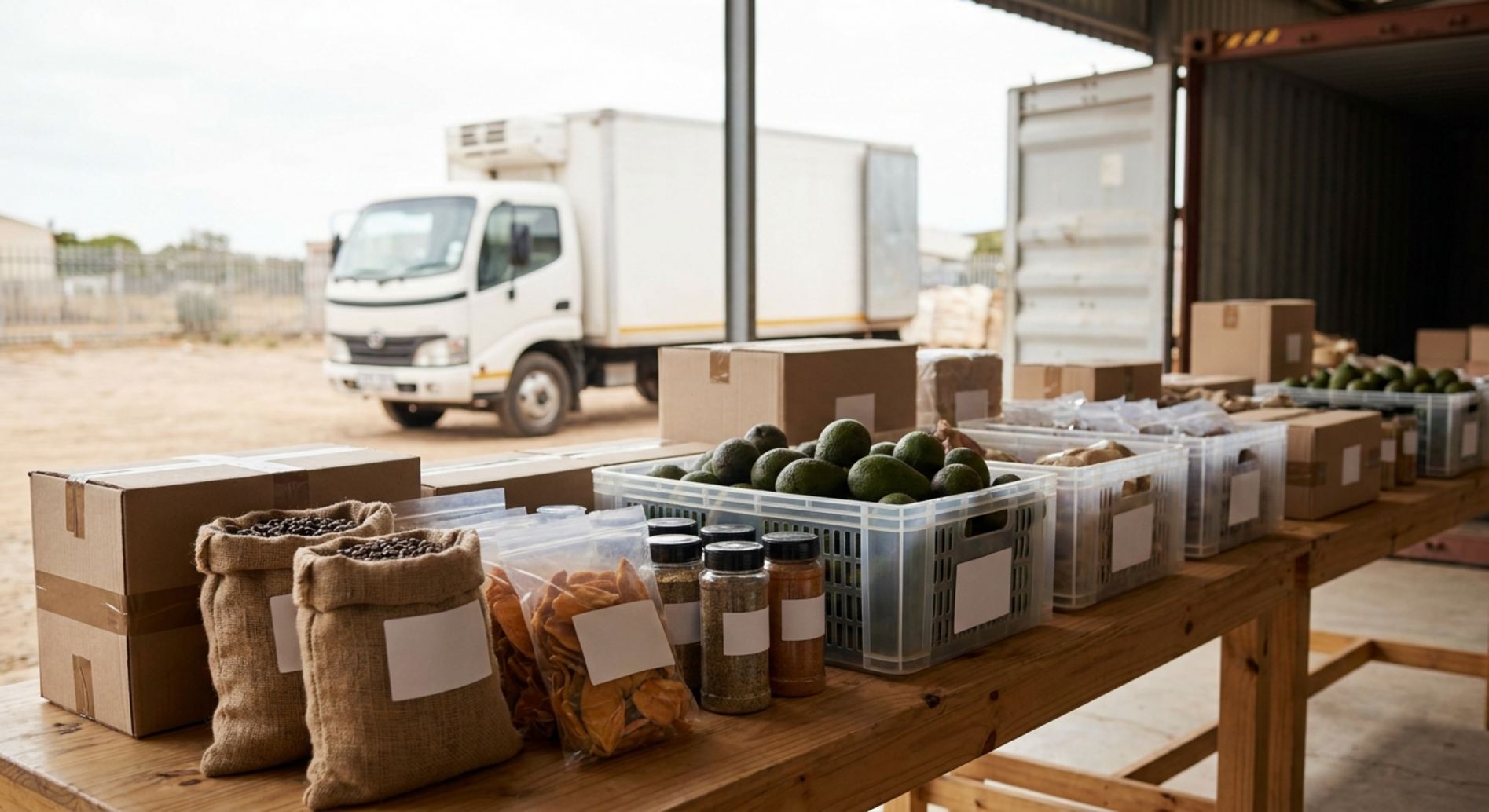
Cacao, coffee, cajou: traceability already mandatory in African supply chains
Some African supply chains no longer have a choice. The EU Deforestation Regulation (EUDR) now requires plot-level traceability for cacao, coffee, palm oil, rubber, soy and timber. In practice, each operator must provide precise geolocation coordinates for plots larger than 4 hectares, in polygon form, along with proof of no deforestation after 31 December 2020.
This regulation has already been delayed twice. The amending text (EU) 2025/2650, published in the EU Official Journal on 23 December 2025, sets the new deadlines: 30 December 2026 for large and medium-sized enterprises, and 30 June 2027 for micro and small enterprises (Council of the European Union, 18 December 2025).
Côte d’Ivoire, the world’s leading cacao producer, has moved ahead. On 12 June 2026 in Abidjan, Yves Brahima Koné, Director General of the Conseil du Café-Cacao, officially launched the National Traceability System (SNT). Over 1.1 million producers are already enrolled, close to 900,000 producer cards have been distributed, and around 3 million hectares of plantations have been geolocated. From 1 September 2026, the opening of the 2026–2027 campaign, the producer card is mandatory for any commercial transaction involving coffee and cacao (KOACI, 12 June 2026).
In Ghana, the world’s second-largest cacao producer, COCOBOD has rolled out its own system, the Ghana Cocoa Traceability System (GCTS), following a pilot in the Assin Fosu region covering more than 40,000 farms and 20,000 producers, 40% of them women. During the 2023–2024 campaign, 1,230 bags of cacao — approximately 77.3 tonnes — were purchased, graded and shipped through this system. The national rollout, announced on 15 October 2024, registered 792,954 producers and mapped over 1.2 million hectares (COCOBOD).
“We have put in place a system and measures that will enable companies to meet their obligations under the EUDR, including cacao traceability and deforestation risk assessment, and we are committed to supplying the European market with compliant cacao,” said Eric Amengor, Deputy Director in charge of monitoring and evaluation at COCOBOD, at the fourth multi-stakeholder EUDR event on 26 May 2026 (The Business & Financial Times, 26 May 2026).
The cajou sector is keeping pace. In Côte d’Ivoire, the world’s leading anacarde producer with 968,676 tonnes in 2021 and a target of over 1.5 million tonnes in 2025, the Wi-Agri platform — launched on 24 February 2022 by Agristore with CIDR-Pamiga and MicroSave Consulting — maps plantations and traces production through to distribution, with mobile money payment. The target for 2025 was 500,000 users, including 100,000 women, and a contribution to 20,000 jobs created (Agence Ecofin). As our analysis of cajou value addition in Côte d’Ivoire shows, this traceability structure now conditions access to the most lucrative processing markets.
In Rwanda, the coffee sector was a pioneer with two complementary systems. INATrace, developed by Anteja with support from German development cooperation (GIZ), is a free, open-source blockchain traceability system deployed with RWASHOSCCO, a grouping of six cooperatives, two of which are exclusively women-led (International Trade Centre). In parallel, the Smart Kungahara System, launched in 2019 by BK TecHouse in partnership with the national authority NAEB, digitally records transactions from over 300 washing stations and targets a market of more than 400,000 producers, while also facilitating their access to bank credit.
Côte d’Ivoire also tested a blockchain solution on cacao as early as 2019–2020 with Cocoblock, developed by NGO Nitidae in partnership with British company Gaiachain and funded at around 60,000 euros by the Technical Centre for Agricultural and Rural Cooperation (CTA, European funding). The pilot project, run with cooperative PCBM (161 members, 306 hectares, spread across three villages), traced close to 500 kilograms of cacao under real conditions (Nitidae).
| Supply chain / country | Traceability system | Lead organisation | Scale reached |
|---|---|---|---|
| Cacao, Côte d’Ivoire | Système National de Traçabilité (SNT) | Conseil du Café-Cacao | 1.1M producers, 900,000 cards, 3M ha geolocated |
| Cacao, Ghana | Ghana Cocoa Traceability System (GCTS) | COCOBOD | 792,954 producers, 1.2M ha mapped |
| Cajou, Côte d’Ivoire | Wi-Agri | Agristore / CIDR-Pamiga | Target: 500,000 users (2025) |
| Coffee, Rwanda | INATrace / Smart Kungahara System | GIZ-Anteja / NAEB-BK TecHouse | 6 cooperatives / target 400,000+ producers |
| Cacao, Côte d’Ivoire (pilot) | Cocoblock (blockchain) | Nitidae / Gaiachain / CTA | 161 producers, 306 ha, ~500 kg traced (2019–2020) |
Supply chains not yet covered by a national system — karité, dried mangue, spices — would do well to draw on these models rather than wait for an equivalent regulatory obligation. A well-maintained lot register and supplier record today costs considerably less than a rushed compliance overhaul the day a buyer or regulator demands it overnight, as happened with cacao and coffee.
These examples show that an SME working in these sectors no longer has much of a choice: either it integrates into these national or cooperative traceability systems, or it risks being automatically shut out of EUDR-compliant purchasing channels from late 2026. As our article on HACCP and ISO 22000 points out, traceability and sanitary certification work as two complementary prerequisites — neither can substitute for the other — when selling into Europe.
On the logistics side, this documentation must also follow the goods through to customs clearance. Our guide on freight forwarders and export customs explains how an incomplete traceability file can, on its own, delay or block a shipment already in transit.
Frequently asked questions about traceability for export
What does the “one step back, one step forward” principle mean?
It is the principle set out in article 18 of Regulation EC 178/2002. Every operator in the food chain must be able to identify their direct supplier (one step back) and their direct customer (one step forward) for each lot sold. They do not need to trace the entire chain — only the two links immediately surrounding them.
Does the EUDR apply to all companies from 2026?
No. The new deadlines set at the end of 2025 draw a distinction between two dates: 30 December 2026 for large and medium-sized enterprises, and 30 June 2027 for micro and small enterprises. Since this regulation has already been delayed twice, it is wise to check the calendar at the time you plan your compliance process.
What minimum documents do I need to keep to prove the traceability of my lots?
At a minimum: a record for each supplier with precise geographical origin, a lot register with numbers and processing dates, a storage register specifying conservation conditions, and the sanitary or phytosanitary certificate required for EU entry.
Is digital traceability — blockchain or QR code — mandatory for export?
No, it is not mandatory as such for a standard SME. A rigorously maintained paper register or spreadsheet is sufficient to meet the requirements of Regulation EC 178/2002. Digital traceability does become unavoidable, however, in supply chains subject to the EUDR (cacao, coffee), where plot geolocation requires a digital tool.
Is there funding available to set up a traceability system?
Yes. Several international programmes support African agrifood SMEs on this issue, including the PSQAO run by UNIDO with EU funding, and the COLEACP Fit For Market programme. These schemes fund both quality upgrades and technical traceability support.
What happens if my shipment is held at the border for a traceability failure?
The lot may be turned back, destroyed or placed in quarantine while the missing documents are provided, with storage and transport costs borne by the exporter. Beyond the immediate cost, a documented hold in the RASFF system can also trigger heightened scrutiny of subsequent shipments from the same company.