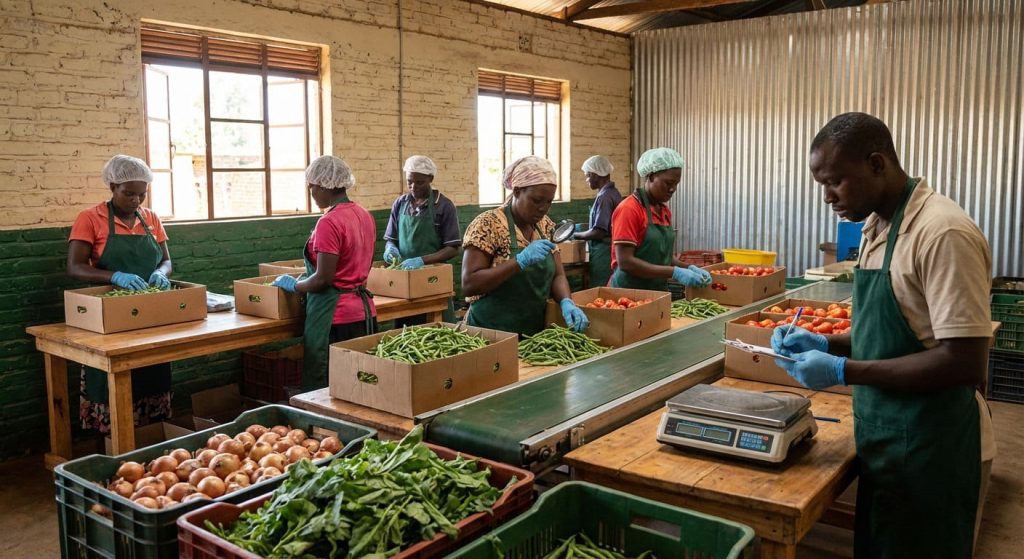

In 2026, the European Union is tightening its grip on imported agrifood products. Two new regulations strengthen border controls, pesticide residue limits are dropping for several substances, growth-promoting antimicrobials will be banned for any animal exported to the EU from 3 September 2026, and specific rules are changing for fisheries, ready-to-eat products, cereals and certain additives.
For an African agrifood company, these changes carry a real risk of border hold-ups — but also an opportunity to stand out if adaptation happens early. This article sets out, point by point, what is concretely changing and how to deal with it:
- Tightened import controls
- New rules on pesticides
- The end of growth-promoting antimicrobials
- Sector-specific rules
- The action plan to stay exportable
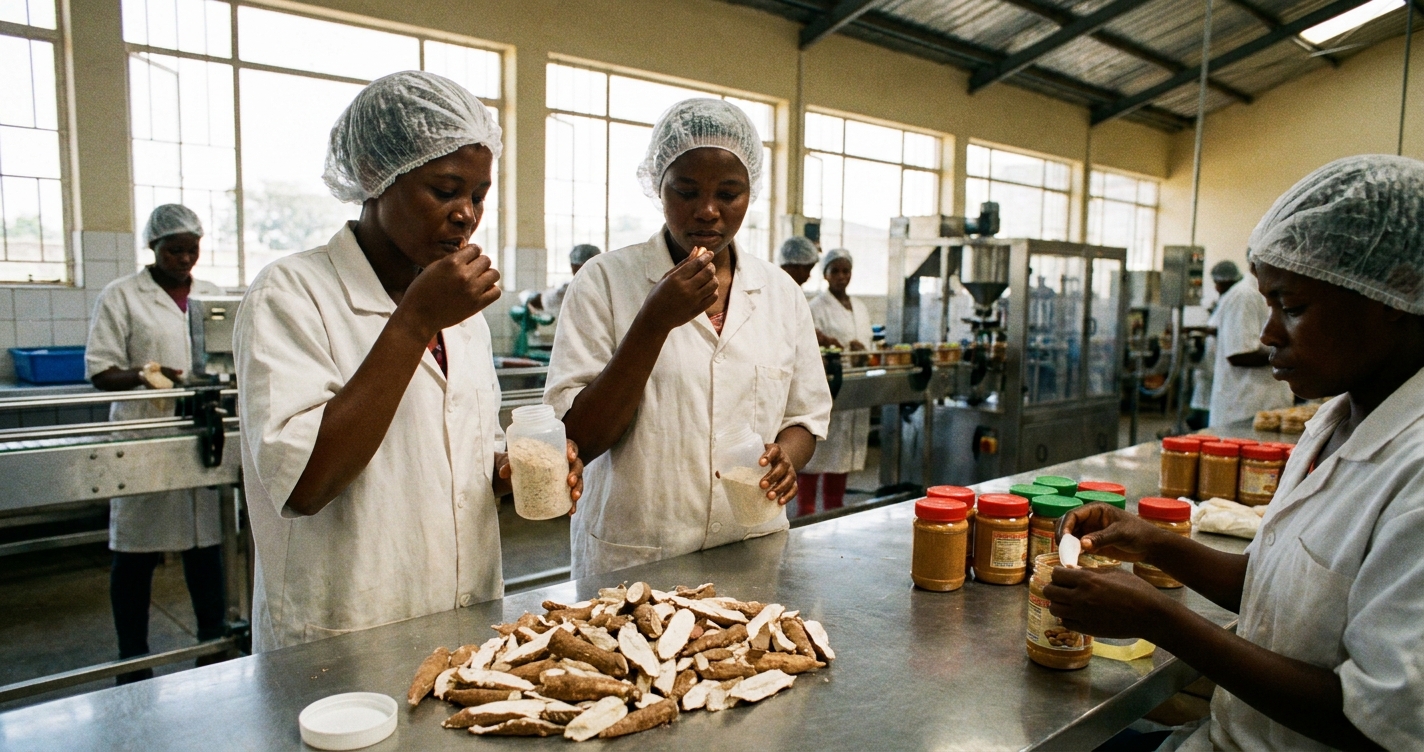
Tightened import controls: what regulations EU 2026/194 and 2026/1206 change
Since 2019, the EU has applied a reinforced control system for certain foods imported from third countries considered at risk: implementing regulation (EU) 2019/1793. This text is updated several times a year, and two major updates were issued in 2026.
Regulation (EU) 2026/194 of 28 January 2026 amends Annexes I and II of the base regulation. In practice: the reinforced control for “ethylene oxide” on okra from India was removed as it was deemed unjustified, while bulk palm oil from Côte d’Ivoire exits the system — but a new measure now targets packaged palm oil for direct human consumption from Côte d’Ivoire, due to the risk of Sudan dyes. Sesame seeds originating from Türkiye enter the system due to Salmonella risk (European Commission, regulation 2026/194, EUR-Lex). Peppers (Capsicum) from Rwanda remain under reinforced control for pesticide residues, at a control rate of around 20% of consignments (AGRINFO Platform, CBI Market Information).
Regulation (EU) 2026/1206 of 9 June 2026, applicable from 30 June 2026, goes further on certain specific African products: the rate of documentary, identity and physical checks rises to 30% for aubergines (Solanum aethiopicum) from Burkina Faso and for custard apples/soursops (Annona squamosa) from Egypt, due to a high rate of non-compliance with pesticide residue rules observed in these consignments (European Commission, regulation 2026/1206).
These two texts sit within a broader framework covering mycotoxins (including aflatoxins), cereulide toxin, pesticide residues, microbiological contamination, Sudan dyes and plant toxins. In practice, a product listed in Annex I undergoes systematic identity and physical checks at a set rate (10%, 20%, 30% or 50% depending on the case), with laboratory analysis at each passage — and a product in Annex II cannot even enter the EU without an official sanitary certificate and accompanying analysis results issued by the exporting country.
| Product | Country of origin | Targeted risk | Control rate / measure | Reference text |
|---|---|---|---|---|
| Okra | India | Ethylene oxide | Removed from reinforced control (2026/194) | Regulation 2026/194 |
| Packaged palm oil | Côte d’Ivoire | Sudan dyes | New targeted control (2026/194) | Regulation 2026/194 |
| Sesame seeds | Türkiye | Salmonella | Added to the system (2026/194) | Regulation 2026/194 |
| Peppers (Capsicum) | Rwanda | Pesticide residues | ~20% of consignments checked | Regulation 2019/1793 as amended |
| Aubergines (Solanum aethiopicum) | Burkina Faso | Pesticide residues | 30% of consignments checked | Regulation 2026/1206 |
| Custard apples/soursops (Annona squamosa) | Egypt | Pesticide residues | 30% of consignments checked | Regulation 2026/1206 |
The impact on an African exporter is direct. A 30% control rate means roughly one consignment in three is held at the border control post while laboratory analysis is carried out — often several days, with refrigerated storage or demurrage costs accumulating during the wait. If a non-conformity is found, the consignment is rejected, returned or destroyed at the importer’s or exporter’s expense depending on the contract. In 2024, more than 3,200 consignments of non-animal foods and food contact materials were refused at EU borders, and more than 14,000 consignments of products of animal origin met the same fate, for reasons ranging from chemical contamination to inadequate documentation (TRACES annual report 2024, cited by Food Safety Magazine). Over 23% of these refusals involved mycotoxins, and fruit and vegetables accounted for 16% of notifications, with pesticide residues remaining the leading cause (citrus, dried fruit, peppers). On aflatoxins alone, the EU refused 127 shipments from Africa in 2024, for exceeding the 2 ppb threshold for aflatoxin B1 (FoodSafetyTech, 2026).
Key takeaways
- Two texts to watch – regulations (EU) 2026/194 (28 January 2026) and (EU) 2026/1206 (9 June 2026, applicable from 30 June 2026) update the list of products and countries under reinforced EU import controls.
- Rates are rising – up to 30% of consignments checked systematically for certain products (aubergines from Burkina Faso, custard apples from Egypt), compared with lower rates previously.
- Five risk categories targeted – mycotoxins, pesticide residues, ethylene oxide, microbiological contamination, Sudan dyes.
- A hidden cost – each control holds up the consignment for several days, with storage costs and a cold chain risk, before it is even known whether the consignment is compliant.
- Check your position – every exporter must verify whether their product and country appear in the latest version of Annexes I and II of regulation 2019/1793, reissued with each update.
Pesticides: MRLs falling and a “zero trace” principle gaining ground
On 7 January 2026, France issued a decree banning the import of products containing five active substances prohibited for use in the EU but still authorised in certain third countries. On the same day, the European Commission presented a draft European regulation aimed at bringing the maximum residue limit (MRL) to zero for three of these five substances: carbendazim, benomyl and thiophanate-methyl (Institut Veblen, Portail Réussir, January 2026). During the week of 20 April 2026, EU member states indicated their support for this Commission proposal.
In practice, this means that a product containing the slightest detectable trace of these substances — even below thresholds that were previously tolerated — can be stopped at the border. This is the “zero trace” principle: for these molecules deemed most dangerous, there is no margin for error. The most exposed sectors are citrus fruits, mangues and papayas, where these substances are sometimes used in post-harvest antifungal treatments in certain producing countries.
Alongside this, a more standard MRL revision regulation — regulation (EU) 2026/215, published on 30 January 2026 — amends the permitted thresholds for other active substances (dimoxystrobin, ethephon, propamocarb) in framework regulation (EC) No 396/2005. This text applies from 19 August 2026. These revisions are permanent and regular: the EU publishes MRL updates several times a year via the AGRINFO MRL tracker, which means a pesticide specification sheet fixed once and for all quickly becomes outdated.
| Substance | Change | Products concerned | Deadline |
|---|---|---|---|
| Carbendazim, benomyl, thiophanate-methyl | MRL brought to zero (draft supported by member states) | Citrus fruits, mangues, papayas | Member state support confirmed April 2026; formal adoption in progress |
| Dimoxystrobin, ethephon, propamocarb | MRL revision (regulation 2026/215) | Cereals, fruit, vegetables depending on substance | Applicable from 19 August 2026 |
| 5 substances banned for use in the EU | Import ban in France (national decree) | All products containing these residues | Decree of 7 January 2026 |
For an African agrifood SME, the good news is that following good agricultural practices is sufficient in the vast majority of cases: EFSA’s 2024 monitoring data show that 98.8% of sweet pepper samples tested in Europe already complied with pesticide regulations (EFSA, 2024 report published in 2026). The risk does not come from a generalised tightening, but from the fact that a few specific substances are moving from a tolerable threshold to zero tolerance. Organisations such as COLEACP (now COLEAD) have been supporting ACP (Africa, Caribbean, Pacific) producers on pesticide management and access to analytical laboratories for years, notably through the Fit For Market SPS programme.
For a sector like cajou, where local processing is growing in Côte d’Ivoire, the priority now is to document precisely which phytosanitary treatments are used upstream, so that this type of tightening can be anticipated rather than absorbed reactively. Our article on cashew nut processing in Côte d’Ivoire sets out how to structure this move up the value chain.
Key takeaways
- Three molecules to eliminate entirely – carbendazim, benomyl, thiophanate-methyl: the MRL drops to zero in the EU draft regulation supported by member states since April 2026.
- Most exposed sectors – citrus fruits, mangues, papayas, due to post-harvest antifungal treatments still used in certain third countries.
- A framework that keeps moving – new MRLs are published several times a year (e.g. regulation 2026/215, applicable from August 2026): a pesticide specification sheet must be reviewed regularly, not fixed once and forgotten.
- Compliance is largely achievable – 98.8% of sweet pepper samples tested in 2024 already met EU thresholds, proof that good agricultural practices are sufficient in most cases.
Animal products: growth-promoting antimicrobials banned from 3 September 2026
This is one of the most structurally significant changes of 2026 for animal product sectors. From 3 September 2026, the EU bans the entry onto its market of products from animals that have received antimicrobials for growth promotion purposes or to compensate for poor husbandry practices, as well as antimicrobials reserved for treating human infections. This rule applies to all exporting third countries without exception (European Commission, press release of 12 May 2026, PubAffairs Brussels).
In practice, to continue exporting food-producing animals or their derived products to the EU after this date, a third country must appear on an official list attesting to its compliance with the new rules. Operators will need to use updated sanitary certificates, including a compliance declaration signed by the competent authority of the exporting country. The scope is broad: livestock, poultry, eggs, aquaculture products, honey and other animal derivatives (European Commission representation in Luxembourg, May 2026).
The most emblematic case of 2026 is Brazil, excluded from the provisional list published on 12 May 2026 for meat and poultry, due to insufficient guarantees on the absence of growth-promoting antimicrobials in its livestock sectors (Agronews, May 2026; Institut Veblen). This precedent shows that the EU applies this measure without leniency, including towards large, longstanding suppliers — a clear signal for any African animal product sector that exports or is considering exporting to the EU.
Alongside this new “antimicrobials” list, there is a separate, older list known as the “public health list” (regulation (EU) 2021/405), which authorises entry of products of animal origin into the EU on a country-by-country and product-by-product basis. This list is also updated at regular intervals: a mid-2026 revision was expected for publication in the third quarter of 2026, with application 20 days after publication. Based on draft texts available at this stage, Kenya would regain authorisation to export finfish products, while Mozambique would lose its authorisation to export crustaceans (AGRINFO Platform, mid-2026 update). For reference, in January 2024, South Africa had been added to the list for marine molluscs and gastropods from aquaculture, while Kenya had been removed at that time (AGRINFO Platform, January 2024).
| Deadline | Measure | Scope | Source |
|---|---|---|---|
| 3 September 2026 | Ban on growth-promoting antimicrobials for all animals exported to the EU | All third countries, livestock/poultry/eggs/aquaculture/honey | European Commission |
| 12 May 2026 | Publication of provisional list of compliant countries | Brazil excluded (meat, poultry) | Agronews, Institut Veblen |
| Q3 2026 (expected) | Revision of “public health” list (regulation 2021/405) | Kenya (finfish) reintegrated; Mozambique (crustaceans) removed | AGRINFO Platform |
For an African livestock farmer or abattoir, the practical consequences are twofold: first, check immediately with the national veterinary authority whether the country is — or is in the process of being included — on the official antimicrobial compliance list; second, revise husbandry practices to eliminate all use of growth-promoting antimicrobials, and document this absence (treatment records, veterinary prescriptions) in order to demonstrate it during an audit. A well-maintained HACCP or ISO 22000 certification greatly facilitates this traceability, as explained in our article on HACCP and ISO 22000: why these certifications open doors to Europe.
Key takeaways
- Date to mark – from 3 September 2026, no growth-promoting antimicrobials will be tolerated in animal product sectors exporting to the EU.
- Two separate lists to monitor – the new “antimicrobial compliance” list and the older “public health” list (regulation 2021/405), revised separately and on different schedules.
- A precedent that sets the tone – Brazil excluded from the provisional list of May 2026 for meat and poultry shows that the EU makes no exceptions, even for large exporters.
- Documentation = protection – veterinary treatment records and HACCP/ISO 22000 certification make it possible to demonstrate compliance in the event of a check or audit.
Fisheries, ready-to-eat products, cereals, additives: the 2026 sector-specific rules to know
Beyond general controls and pesticides, several technical rules are changing in 2026 depending on the type of product. They receive less attention, but are just as likely to cause a blockage if they are overlooked.
Fisheries and aquaculture. Since 10 January 2026, the CATCH system has been integrated into the TRACES platform and makes digital submission of catch certificates mandatory — paper documentation is no longer accepted in the new system. A transitional period does, however, allow certificates issued in the old format before 2 September 2026 to be used until 3 December 2026 (Mid-Atlantic Council / MLC Alliance, InFoX.com, 2026). For aquaculture products (fish, molluscs, crustaceans), only species listed on the EU list can be certified for further processing, in accordance with regulation (EU) 2024/216. In practice, an exporter of shrimps or processed fish (including tuna in brine) must ensure that its documentation process is fully digitalised in TRACES/CATCH before shipping — a paper file, however complete, will no longer be sufficient. Precise details on any potential new hygiene model specific to tuna in brine had not been communicated clearly in the sources available at the time of writing.
Ready-to-eat products (Listeria). Regulation (EU) 2024/2895, applicable from 1 July 2026, strengthens microbiological criteria for Listeria monocytogenes. Manufacturers must now be able to demonstrate, via a shelf-life study, that their product remains below 100 CFU/g of Listeria monocytogenes throughout its shelf life. If this cannot be demonstrated, the stricter criterion of absence of the bacterium in 25 g applies (Actalia, After All, 2026). Products covered include chilled ready meals, smoked fish, ripened cheeses, cured meats, deli products and chilled pastries — a category that directly concerns African companies exporting chilled processed products or smoked fish to Europe.
Cereals and pseudo-cereals (nickel). Regulation (EU) 2024/1987, which amends regulation (EU) 2023/915 on contaminants, sets new maximum nickel contents. These thresholds apply to cereals from 1 July 2026 (a transitional derogation having allowed stocks legally placed on the market before 1 July 2025 to be sold through).
| Product | Maximum nickel content |
|---|---|
| Durum wheat and rice (other than husked rice) | 1.5 mg/kg |
| Husked rice | 2 mg/kg |
| Pseudo-cereals and millet | 3 mg/kg |
| Other cereals | 0.8 mg/kg |
This limit directly concerns cereal and pseudo-cereal sectors (fonio, sorgho, mil, rice) exporting to the EU, as nickel generally comes from the soil or from metal processing equipment (Phytocontrol, AXELGROUPE, 2026).
Additives and flavourings. Regulation (EU) 2025/2084, adopted on 20 October 2025, amends the specifications for quillaia extract (E999), used as a foaming agent in certain beverages and confectionery products. New stricter specifications on heavy metals have applied since 9 May 2026, with an extension of use to solid and liquid food supplements (excluding infants and young children). Stocks complying with the old specifications placed on the market before 9 May 2026 remain usable until exhausted (Food Compliance International, EUR-Lex 2025/2084). On smoke flavourings, the regulation that entered into force on 21 August 2024 provides for a transitional period: until 1 July 2026 for products such as crisps, dried fruit, soups and sauces, and until 1 July 2029 for meats, fish and cheeses smoked using traditional methods (SNIAA, CTCPA, 2026). Any company using smoke flavourings in its formulations must check whether its product falls into the short transition category (2026) or the long transition category (2029).
Key takeaways
- Fisheries: paper is out – since 10 January 2026, catch certificates must go through the digital CATCH/TRACES system; tolerance for old formats only until 3 December 2026.
- Listeria: shelf life matters – from 1 July 2026, a study must demonstrate that the product stays below 100 CFU/g through to the use-by date; otherwise, total absence in 25 g is required.
- Nickel: precise thresholds by cereal type – from 0.8 mg/kg to 3 mg/kg depending on the cereal or pseudo-cereal, applicable from 1 July 2026.
- Smoke flavourings: check your category – transition until 2026 for some products, until 2029 for others: the same manufacturer may face both deadlines depending on its product range.
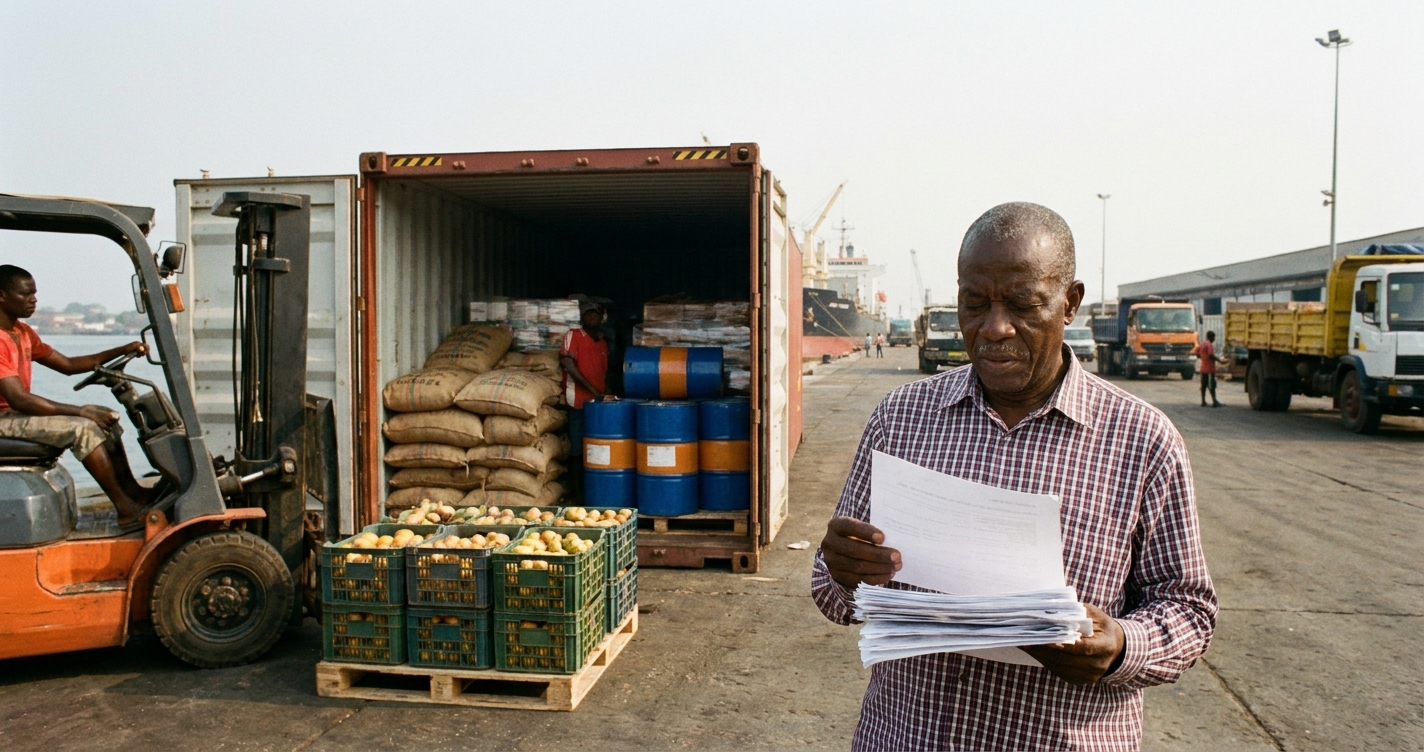
Action plan: staying exportable to the EU after 2026
Faced with this accumulation of rules, the challenge is not to memorise everything, but to put a simple method in place so nothing falls through the cracks. Below is an operational checklist, built from the five changes detailed above.
1. Check your position in the reinforced control annexes. Each update to regulation 2019/1793 (such as 2026/194 and 2026/1206) republishes a full list of the products and countries concerned. An exporter must consult this list with each update — at least twice a year — to know whether their product is affected and at what rate.
2. Schedule laboratory analyses before shipment, not only on arrival. Having a sample analysed before dispatch, in an accredited laboratory, costs less than a rejected consignment on arrival in Europe. Networks such as the COLEACP/COLEAD Fit For Market SPS programme help ACP producers access these laboratories and interpret results.
3. Update records and documentation. For animal product sectors, this means keeping veterinary treatment records proving the absence of growth-promoting antimicrobials. For plant-based sectors, it means documenting the phytosanitary treatments used, with dates and dosages. A HACCP or ISO 22000 certification naturally structures this documentation.
4. Digitalise certificates, especially for fisheries. The shift to fully digital processing through CATCH/TRACES is no longer optional for seafood products: a paper file, however complete, will be refused once the transitional period ends.
5. Update contracts with importers. Clauses specifying who bears the cost of a rejected consignment (destruction, return shipment, storage) must be clarified before dispatch, not negotiated after a border hold-up.
6. Weigh the cost of adaptation against the cost of doing nothing. No precise average cost per rejected consignment or RASFF notification is published in consolidated form by European authorities across sectors. What is documented, however, is the scale of the problem: more than 3,200 non-animal consignment refusals and more than 14,000 animal product refusals in a single year (2024) at EU borders. Investing in preventive analyses, upgrading practices or obtaining a certification almost always costs less than a destroyed cargo, a lost customer or a damaged reputation on the European market. Our article on the cost of an agrifood certification and how to finance it provides useful benchmarks for this calculation.
7. Finance the upgrade without waiting for a conventional bank loan. Many small companies postpone these investments for lack of available cash. Solutions exist outside traditional bank lending — see our article on how to finance production without a conventional bank loan — to fund a laboratory analysis, a slaughterhouse upgrade or a certification without waiting for a hypothetical credit line.
8. Turn compliance into a commercial argument. A company that can demonstrate — with documents to back it up — that it already meets the zero-trace thresholds, the absence of growth-promoting antimicrobials and the new Listeria criteria can use this as a selling point with the most demanding European importers, who are actively looking for reliable suppliers to secure their own supply chains. This is a genuine niche opportunity: fewer suppliers will be able to keep pace with tightening requirements, which strengthens the position of those who adapt early. Côte d’Ivoire illustrates this logic of anticipation on a different EU regulatory dossier — the deforestation regulation (EUDR): the producer card and the national traceability system (SNT), made mandatory from 1 September 2026 for the 2026–2027 cacao-coffee season, have already registered more than one million producers and geolocated around three million hectares of plantations, at an implementation cost of 6.5 billion CFA francs (Agence Ecofin, Mongabay, 2026). This is not the same regulation as those detailed in this article, but the approach — getting organised before the deadline rather than being caught out by it — applies directly to the 2026 sanitary and phytosanitary controls.
Key takeaways
- Regular monitoring, not a one-off check – the reinforced control annexes change several times a year; a single verification is not enough.
- Analyse before you ship – a test in an accredited laboratory before departure costs less than a refusal on arrival in Europe.
- Document everything – veterinary records, phytosanitary treatments, shelf-life studies: written evidence protects you in the event of a check.
- Compliance is a sales argument – in a market where requirements keep tightening, being in conformity becomes a supplier selection criterion for European importers.
Frequently asked questions
What concretely changes in EU regulations on imported agrifood products in 2026?
Several things change at the same time: reinforced import controls are updated (new products and countries covered, higher control rates), pesticide residue limits drop for certain substances deemed dangerous, growth-promoting antimicrobials will be banned for all animals exported to the EU from 3 September 2026, and specific rules are evolving for fisheries, ready-to-eat products, cereals and certain additives.
Should my company be concerned if it does not yet export to Europe?
Yes, to some extent. These rules apply at the point of entry onto the European market, so a company planning to export in the coming years would do well to integrate these requirements into its production practices now, rather than having to overhaul everything when its first shipment goes out.
How do I know if my product or country is subject to reinforced controls?
You need to consult Annexes I and II of regulation 2019/1793 as amended by successive updates, including regulations 2026/194 and 2026/1206. These annexes list precisely each product, each country and the applicable control rate. An export support organisation or a regulatory consultant can help interpret these lists.
What happens if a consignment is refused at the EU border?
The consignment can be destroyed, returned to the country of origin or held pending a decision, depending on the circumstances. All three options generate costs for the exporter or importer, on top of the time lost and the risk to the commercial relationship. This is why anticipating compliance is preferable to discovering a problem at the point of inspection.
Does the ban on growth-promoting antimicrobials only concern large exporters like Brazil?
No, it applies to all third countries that export food-producing animals or their products to the EU, regardless of their size. The case of Brazil, excluded from a provisional list in May 2026, simply shows that the EU applies this rule strictly, including to large, established suppliers.
Can a small company realistically meet European standards without a large budget?
Yes, by prioritising. Most requirements rest on good practices that are already well known (hygiene, traceability, measured use of inputs) rather than on heavy investment. The most significant costs generally involve laboratory analyses and certifications, for which alternative financing solutions and support programmes are available.